
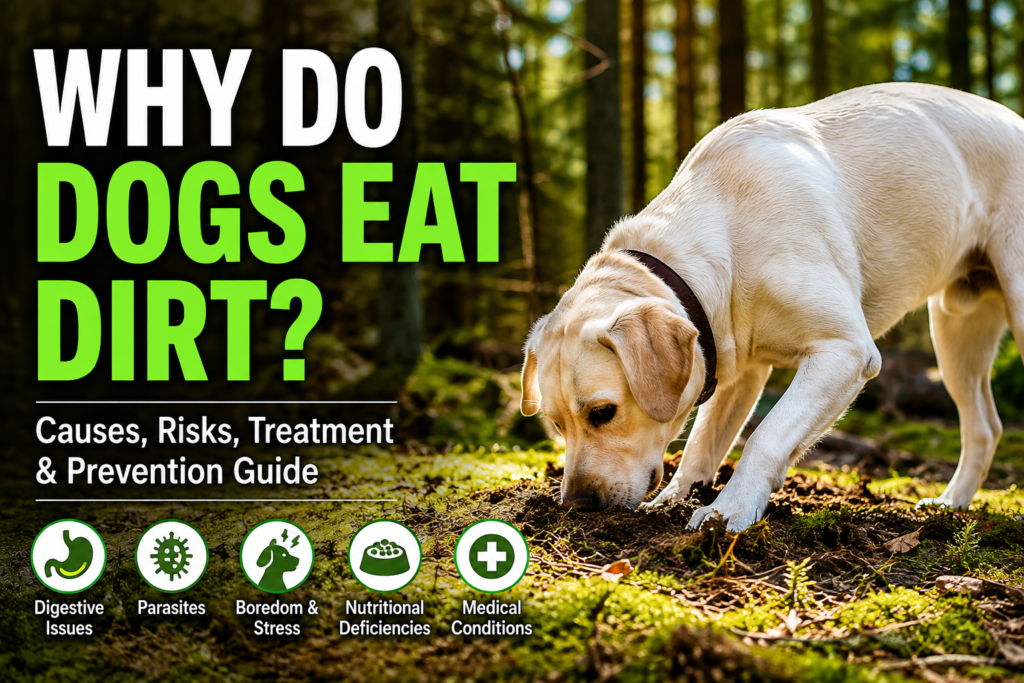
If you’ve ever caught your dog digging in the yard and eating soil, you’re probably wondering, why do dogs eat dirt? This unusual behavior is actually more common than many pet owners realize. While some dogs eat dirt out of curiosity, others may do it because of boredom, nutritional deficiencies, digestive issues, stress, or underlying medical conditions.
Understanding why do dogs eat dirt is important because, although eating a small amount of clean soil may not always cause serious harm, frequent dirt eating can sometimes indicate a health problem that requires veterinary attention. Dirt may also contain harmful bacteria, parasites, pesticides, fertilizers, or toxic substances that can make your dog sick.
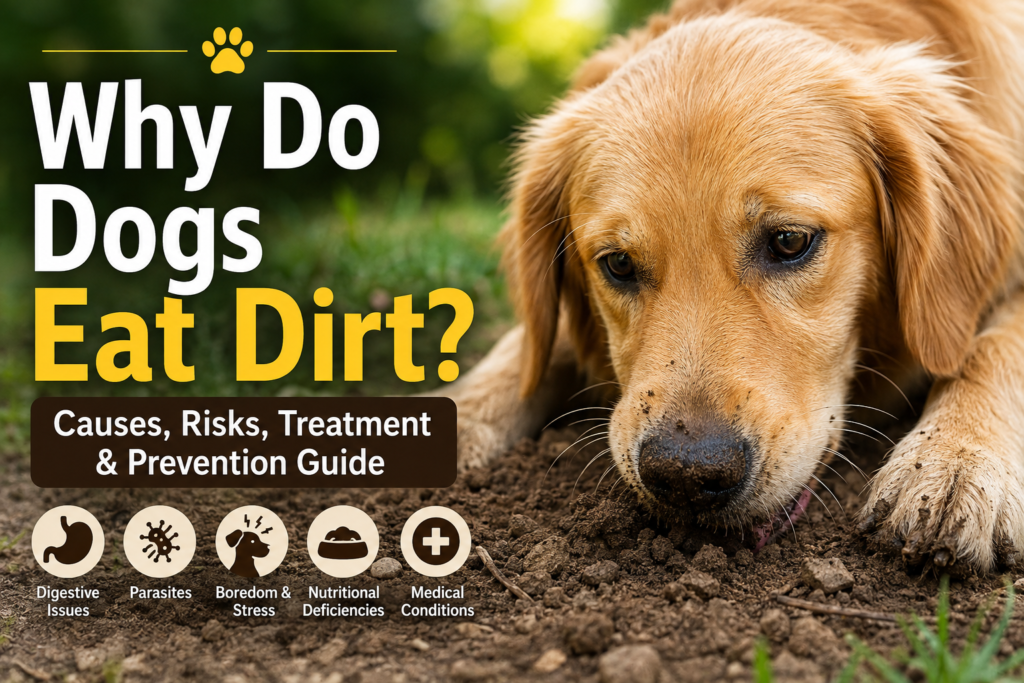
Many owners ask why do dogs eat dirt after noticing their dog repeatedly licking or swallowing soil in the backyard, garden, or during walks. In some cases, this behavior is harmless and temporary. In others, it may be linked to a condition known as pica, where dogs repeatedly eat non-food items.
In this complete guide, you’ll learn everything about why do dogs eat dirt, including the most common causes, potential health risks, warning signs, treatment options, and practical ways to stop your dog from eating dirt safely.
Is It Normal for Dogs to Eat Dirt?
Many owners wonder why do dogs eat dirt and whether it’s normal.
The answer is sometimes.
A dog that tastes or licks a little soil once or twice is usually not a major concern. Dogs naturally explore the world with their noses and mouths, so occasional dirt tasting can simply be curiosity.
However, if your dog repeatedly eats dirt or large amounts of soil, it’s not considered normal and should be investigated. Frequent dirt eating may signal an underlying medical or behavioral problem.
If you’re asking why do dogs eat dirt, pay attention to how often it happens and whether your dog shows any other symptoms such as vomiting, diarrhea, weight loss, or changes in appetite.
Common Reasons Why Dogs Eat Dirt
There isn’t just one answer to why do dogs eat dirt. Several factors may contribute to this behavior.
The most common causes include:
- Curiosity
- Boredom
- Stress or anxiety
- Nutritional deficiencies
- Digestive problems
- Pica
- Parasites
- Hunger
- Learned behavior
- Medical conditions
Let’s explore each cause in detail.
1. Curiosity
One of the simplest reasons why do dogs eat dirt is curiosity.
Puppies, especially, explore everything with their mouths. They may lick or chew soil simply because it’s something new and interesting.
Most puppies outgrow this behavior as they mature.
2. Boredom
Dogs that don’t receive enough physical exercise or mental stimulation often develop unusual habits.
If you’re asking why do dogs eat dirt, boredom could be the answer.
Dogs left alone for long periods may:
- Dig holes
- Chew sticks
- Eat grass
- Eat dirt
- Destroy household items
Daily walks, puzzle toys, and interactive play sessions can significantly reduce boredom-related dirt eating.
3. Nutritional Deficiencies
Many people ask why do dogs eat dirt because they’ve heard it means their dog lacks nutrients.
While this isn’t always true, deficiencies in certain minerals or nutrients may contribute to unusual eating behaviors.
Possible deficiencies include:
- Iron
- Zinc
- Calcium
- Trace minerals
A balanced commercial dog food usually provides all necessary nutrients. If you suspect a deficiency, consult your veterinarian before giving supplements.
4. Digestive Problems
Dogs experiencing digestive discomfort may sometimes eat dirt.
If you’re wondering why do dogs eat dirt, stomach upset could be one explanation.
Possible digestive issues include:
- Acid reflux
- Upset stomach
- Inflammatory bowel disease
- Gastritis
- Constipation
Some dogs may instinctively eat dirt while trying to soothe stomach discomfort, although this behavior can sometimes make the problem worse.
5. Pica in Dogs
One of the most common medical explanations for why do dogs eat dirt is a condition called pica.
Pica is a disorder in which dogs repeatedly eat non-food items such as:
- Dirt
- Rocks
- Sand
- Paper
- Plastic
- Wood
- Fabric
If your dog constantly eats dirt and other unusual objects, pica may be the cause. Since why do dogs eat dirt can sometimes indicate an underlying health issue, dogs with suspected pica should be examined by a veterinarian.
Pica may be associated with:
- Nutritional deficiencies
- Digestive diseases
- Diabetes
- Liver disease
- Stress
- Anxiety
- Certain medications
6. Parasites
Another reason why do dogs eat dirt may be intestinal parasites.
Parasites can interfere with nutrient absorption, causing dogs to seek unusual substances.
Common parasites include:
- Roundworms
- Hookworms
- Whipworms
- Tapeworms
- Giardia
Signs of parasites include:
- Weight loss
- Pot-bellied appearance
- Diarrhea
- Vomiting
- Poor coat condition
- Increased appetite
If you’re wondering why do dogs eat dirt and your dog has these symptoms, your veterinarian may recommend a fecal examination.
7. Stress and Anxiety
Some dogs eat dirt to cope with stress.
If you’re asking why do dogs eat dirt, emotional factors can sometimes be responsible.
Stress triggers include:
- Moving to a new home
- Separation anxiety
- Loud noises
- New pets
- Changes in routine
- Lack of socialization
Dogs may develop repetitive behaviors, including dirt eating, as a way to relieve anxiety.
Providing regular exercise, mental stimulation, and a predictable routine may help reduce stress-related dirt eating.
8. Hunger
A hungry dog may search for almost anything to eat.
If you’re wondering why do dogs eat dirt, hunger could be one explanation, especially if your dog isn’t receiving enough calories or is missing meals.
Dogs with increased appetite may have:
- Poor-quality diets
- Heavy exercise schedules
- Parasites
- Diabetes
- Thyroid disorders
Always feed a complete, balanced diet appropriate for your dog’s age, size, and activity level.
9. Learned Behavior
Sometimes why do dogs eat dirt has a surprisingly simple answer.
Dogs learn through observation and repetition.
For example:
- A puppy copies another dog.
- The behavior receives attention from owners.
- Digging becomes a fun game.
- Dirt eating becomes a habit.
Training and positive reinforcement can help break this behavior before it becomes routine.
10. Medical Conditions
Several medical conditions may explain why do dogs eat dirt.
These include:
- Anemia
- Diabetes
- Liver disease
- Kidney disease
- Gastrointestinal disorders
- Hormonal imbalances
If your dog suddenly begins eating dirt without any obvious reason, schedule a veterinary examination.
Is Eating Dirt Dangerous for Dogs?
Yes—it can be.
Although swallowing a tiny amount of clean soil usually isn’t harmful, frequent dirt eating can expose dogs to several health risks.
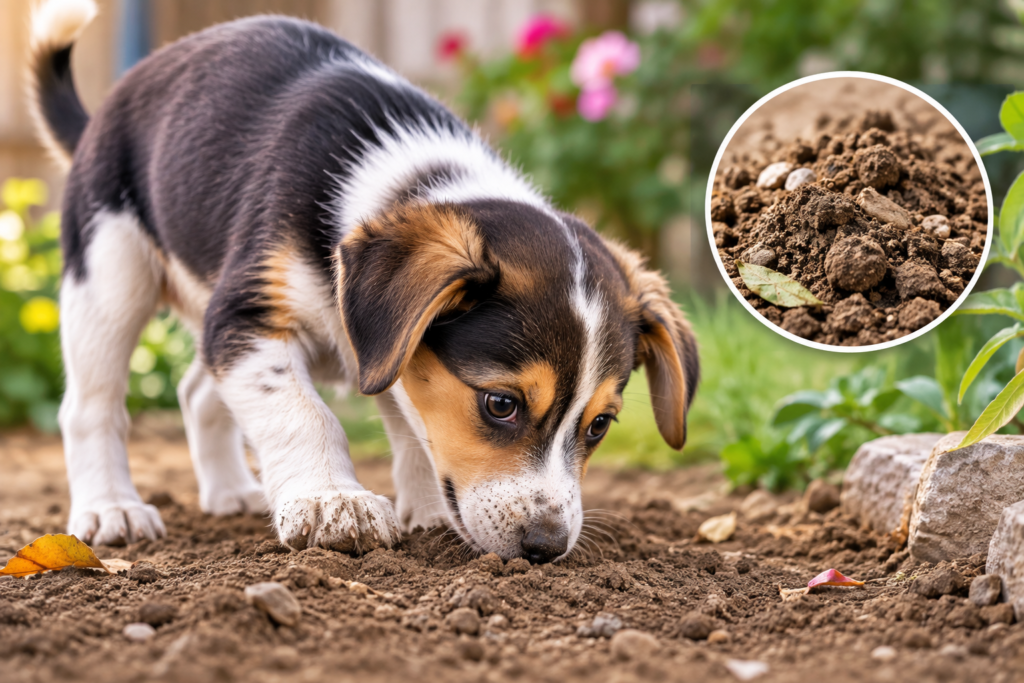
If you’re asking why do dogs eat dirt, it’s also important to understand what can happen when they do.
Possible dangers include:
- Intestinal blockage
- Parasites
- Toxic chemicals
- Fertilizers
- Pesticides
- Poisonous plants
- Sharp rocks
- Broken glass
- Bacteria
- Mold
For this reason, repeated dirt eating should never be ignored.
Health Risks of Eating Dirt
1. Intestinal Blockage
Large amounts of dirt, rocks, or gravel may block the digestive tract.
If you’re wondering why do dogs eat dirt, this behavior can sometimes lead to a life-threatening obstruction.
Signs include:
- Vomiting
- Constipation
- Abdominal pain
- Loss of appetite
- Lethargy
Emergency surgery may be required if the blockage cannot pass naturally.
2. Parasite Infection
Soil may contain parasite eggs.
Dogs eating contaminated dirt may become infected with intestinal worms.
Routine deworming and veterinary care greatly reduce this risk.
3. Poisoning
Garden soil often contains:
- Fertilizers
- Weed killers
- Insecticides
- Slug bait
These chemicals can be toxic if swallowed.
If your dog eats dirt from treated lawns or gardens, contact your veterinarian immediately if symptoms develop.
4. Bacterial Infection
Contaminated soil may contain harmful bacteria, including:
- Salmonella
- E. coli
- Clostridium
These bacteria can cause severe digestive illness.
5. Dental Damage
Dogs that chew rocks mixed with dirt may crack or break their teeth.
This can lead to:
- Pain
- Infection
- Difficulty eating
- Expensive dental treatment
Warning Signs After Eating Dirt
Many owners ask why do dogs eat dirt, but it’s equally important to know when the behavior becomes dangerous.
Watch for:
- Vomiting
- Diarrhea
- Blood in stool
- Constipation
- Abdominal swelling
- Loss of appetite
- Weakness
- Excessive drooling
- Difficulty swallowing
- Lethargy
These symptoms may indicate an obstruction, poisoning, infection, or another serious condition.
When Should You See a Veterinarian?
Contact your veterinarian if:
- Your dog eats dirt every day.
- Your dog also eats rocks or gravel.
- Vomiting continues.
- Diarrhea lasts more than 24 hours.
- Your dog becomes weak.
- Blood appears in vomit or stool.
- Your dog stops eating.
- Your dog appears to be in pain.
If you’re asking why do dogs eat dirt because the behavior has become frequent or is accompanied by illness, a veterinary examination is the safest course of action.
How to Stop Your Dog from Eating Dirt
If you’re wondering why do dogs eat dirt, you’ll also want to know how to stop this behavior. The best solution depends on the underlying cause. Some dogs simply need more exercise, while others may require veterinary treatment for an underlying health problem.
If your dog frequently eats dirt, start by identifying the cause and then take appropriate steps to correct it.
1. Feed a Complete and Balanced Diet
One possible reason why do dogs eat dirt is poor nutrition.
Choose a high-quality dog food that meets your dog’s nutritional needs based on:
- Age
- Breed
- Weight
- Activity level
- Health condition
A balanced diet provides essential vitamins and minerals that may reduce unusual eating behaviors.
2. Increase Daily Exercise
Dogs with excess energy often develop unwanted habits.
If you’re asking why do dogs eat dirt, boredom and lack of exercise may be contributing factors.
Daily exercise may include:
- Walking
- Running
- Fetch
- Swimming
- Hiking
- Agility training
A tired dog is much less likely to spend time eating dirt.
3. Provide Mental Stimulation
Mental enrichment is just as important as physical exercise.
Try:
- Puzzle feeders
- Interactive toys
- Snuffle mats
- Hide-and-seek games
- Basic obedience training
- Food-dispensing toys
Many dogs stop eating dirt once they have enough mental stimulation.
4. Supervise Outdoor Time
If your dog frequently eats dirt in the backyard, supervision can help.
When outside:
- Watch your dog closely.
- Interrupt dirt-eating immediately.
- Redirect attention to a toy or game.
- Reward good behavior with praise or treats.
This helps your dog learn that eating dirt is not rewarding.
5. Teach the “Leave It” Command
Training is one of the most effective ways to stop dirt eating.
Teach commands like:
- Leave it
- Drop it
- Come
- Watch me
When your dog approaches dirt, calmly say “Leave it.”
Reward your dog immediately when they obey.
Positive reinforcement works much better than punishment.
6. Reduce Stress and Anxiety
Stress is another reason why do dogs eat dirt.
Help reduce anxiety by:
- Keeping a consistent routine
- Providing a safe resting area
- Avoiding long periods alone
- Offering enrichment toys
- Using calming activities
If anxiety is severe, speak with your veterinarian or a qualified dog behaviorist.
7. Schedule a Veterinary Examination
If you’re still asking why do dogs eat dirt after improving diet and exercise, it’s time to visit your veterinarian.
Your veterinarian may recommend:
- Physical examination
- Blood tests
- Stool testing
- Parasite screening
- Nutritional evaluation
Treating the underlying medical problem often stops the dirt-eating behavior.
Prevention Tips
Preventing dirt eating is usually easier than treating complications later.
✅ Do
- Feed high-quality dog food.
- Keep your dog active.
- Provide mental stimulation.
- Deworm regularly.
- Schedule routine veterinary checkups.
- Supervise outdoor play.
❌ Don’t
- Punish your dog harshly.
- Ignore frequent dirt eating.
- Allow access to treated lawns.
- Leave your dog bored for long periods.
- Delay veterinary care if symptoms appear.
Home Remedies: Safe vs. Unsafe
Many owners search for home remedies after asking why do dogs eat dirt.
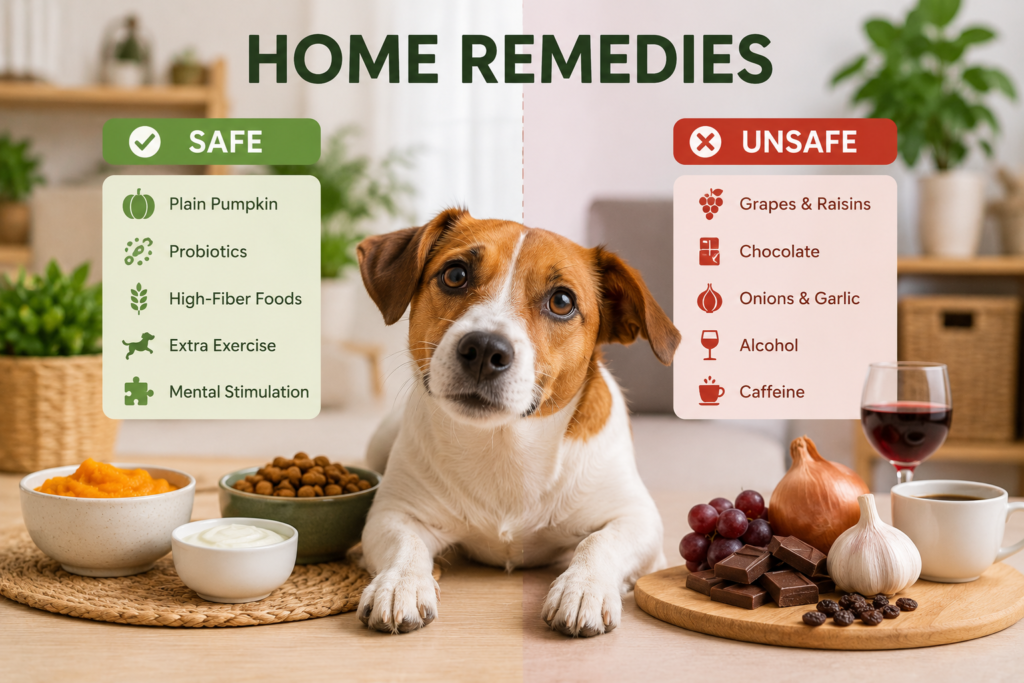
Safe Options
- Increase daily exercise
- Improve diet quality
- Use puzzle toys
- Practice obedience training
- Provide fresh water
- Remove access to contaminated soil
Unsafe Options
Never try to:
- Spray chemicals on soil.
- Force your dog to vomit.
- Punish your dog physically.
- Give human medications without veterinary approval.
- Ignore persistent dirt eating.
Which Dogs Are More Likely to Eat Dirt?
Although any dog can develop this habit, some are more likely than others.
These include:
- Puppies
- Highly energetic breeds
- Working dogs
- Herding breeds
- Dogs with anxiety
- Dogs with digestive disorders
Remember, why do dogs eat dirt varies from dog to dog, so identifying the underlying cause is essential.
Do Puppies Eat Dirt More Often?
Yes.
Puppies naturally explore their environment using their mouths.
If you’re wondering why do dogs eat dirt, puppies often do it because of:
- Curiosity
- Teething
- Exploration
- Play
Most puppies outgrow this behavior with training and supervision.
However, if a puppy eats dirt frequently or shows signs of illness, consult your veterinarian.
Can Eating Dirt Cause Long-Term Problems?
Yes, especially if the behavior continues.
Repeated dirt eating may lead to:
- Chronic digestive upset
- Tooth damage
- Intestinal blockages
- Parasite infections
- Exposure to toxic chemicals
- Nutritional imbalances
Early intervention helps prevent serious complications.
Veterinary Treatment
Treatment depends on the reason why do dogs eat dirt.
Your veterinarian may recommend:
- Deworming medication
- Dietary changes
- Vitamin or mineral supplementation (only if needed)
- Treatment for digestive disease
- Anxiety management
- Behavioral therapy
Never give supplements unless recommended by your veterinarian, as too much of certain vitamins or minerals can also be harmful.
Quick Summary Table
| Cause | Can It Be Serious? | Solution |
| Curiosity | No | Supervision and training |
| Boredom | Sometimes | More exercise and enrichment |
| Nutritional deficiency | Yes | Balanced diet and veterinary advice |
| Parasites | Yes | Deworming and fecal testing |
| Pica | Yes | Veterinary diagnosis and treatment |
| Stress or anxiety | Sometimes | Reduce stress and behavior training |
| Digestive problems | Yes | Veterinary examination |
| Hunger | Sometimes | Adjust feeding plan |
Frequently Asked Questions (FAQs)
1. Why do dogs eat dirt?
If you’re wondering why do dogs eat dirt, the most common reasons include curiosity, boredom, nutritional deficiencies, digestive problems, stress, anxiety, parasites, or a condition called pica. Occasional dirt eating may not be serious, but frequent episodes should be evaluated by a veterinarian.
2. Is eating dirt bad for dogs?
Yes, it can be. Although a small amount of clean soil may not cause harm, eating dirt can expose dogs to parasites, bacteria, pesticides, fertilizers, and even intestinal blockages.
3. Why does my dog suddenly start eating dirt?
A sudden change in behavior may indicate an underlying health problem such as stomach upset, anemia, parasites, or stress. If you’re asking why do dogs eat dirt because the behavior started unexpectedly, it’s best to schedule a veterinary examination.
4. Can puppies eat dirt?
Puppies often eat dirt out of curiosity while exploring their surroundings. However, they should be discouraged because dirt may contain harmful bacteria, parasites, or chemicals.
5. Can eating dirt make my dog sick?
Yes. Eating contaminated soil can cause:
- Vomiting
- Diarrhea
- Parasite infections
- Bacterial infections
- Poisoning
- Intestinal blockage
Monitor your dog closely if they eat dirt frequently.
6. Is dirt eating a sign of nutritional deficiency?
Sometimes. One reason why do dogs eat dirt may be a lack of certain nutrients, such as iron or other minerals. However, many dogs eat dirt for behavioral reasons rather than dietary deficiencies.
7. What is pica in dogs?
Pica is a condition where dogs repeatedly eat non-food items such as dirt, rocks, paper, plastic, or fabric. If your dog regularly eats these objects, consult your veterinarian for a diagnosis.
8. How can I stop my dog from eating dirt?
To help stop dirt eating:
- Feed a balanced diet.
- Increase exercise.
- Provide mental stimulation.
- Supervise outdoor activities.
- Teach the “Leave It” command.
- Visit your veterinarian if the behavior continues.
9. Why does my dog eat dirt and grass?
Some dogs eat both grass and dirt because of curiosity, boredom, digestive discomfort, or pica. If the behavior becomes frequent or is accompanied by vomiting or weight loss, seek veterinary advice.
10. Can eating dirt cause intestinal blockage?
Yes. If a dog swallows large amounts of dirt, rocks, or gravel, it can lead to a blockage in the digestive tract. This is a medical emergency that may require surgery.
11. Should I worry if my dog eats dirt once?
Not necessarily. A single episode is usually not a cause for concern if your dog remains healthy. However, repeated dirt eating should be investigated to determine the underlying cause.
12. When should I take my dog to the veterinarian?
Contact your veterinarian if your dog:
- Eats dirt every day
- Vomits repeatedly
- Has diarrhea for more than 24 hours
- Appears weak or lethargic
- Stops eating
- Has blood in the stool
- Eats rocks along with dirt
13. Can stress cause dogs to eat dirt?
Yes. Anxiety, boredom, separation anxiety, or major life changes can contribute to dirt-eating behavior. Reducing stress and providing enrichment often helps.
14. Can parasites make dogs eat dirt?
Yes. Intestinal parasites may interfere with nutrient absorption and contribute to unusual eating behaviors. Routine fecal testing and deworming can help prevent parasite-related problems.
15. Can dogs recover from dirt-eating behavior?
Yes. Most dogs stop eating dirt once the underlying cause is identified and treated. Proper nutrition, training, enrichment, and veterinary care can successfully resolve the problem.
Cornell University College of Veterinary Medicine
Final Thoughts
If you’ve been asking why do dogs eat dirt, the answer isn’t always simple. Some dogs eat dirt out of curiosity, while others do it because of boredom, stress, digestive problems, nutritional deficiencies, parasites, or medical conditions such as pica.
Although an occasional mouthful of clean soil may not be harmful, frequent dirt eating should never be ignored. Dirt can contain parasites, bacteria, pesticides, fertilizers, and other substances that may put your dog’s health at risk. Understanding why do dogs eat dirt allows you to address the root cause instead of simply stopping the behavior.
The best approach is to provide a balanced diet, regular exercise, mental enrichment, and routine veterinary care. If your dog suddenly begins eating dirt or shows signs of illness such as vomiting, diarrhea, weight loss, or lethargy, consult your veterinarian as soon as possible.
By identifying why do dogs eat dirt and taking the appropriate steps, you can help keep your dog healthy, safe, and happy for years to come.