
If you’re wondering how often do dogs need rabies vaccine, you’re asking one of the most important questions about responsible dog ownership. Rabies is a deadly viral disease that affects the brain and nervous system of mammals, including dogs and humans. Once symptoms appear, rabies is almost always fatal. Fortunately, it is also one of the easiest diseases to prevent through routine vaccination.
Understanding how often dogs need rabies vaccine helps you keep your dog healthy, comply with local vaccination laws, and protect your family from a potentially life-threatening disease. Whether you have a playful puppy or a senior dog, staying on schedule with rabies vaccinations is essential for lifelong protection.
In this complete guide, you’ll learn exactly how often do dogs need rabies vaccine, when puppies should receive their first rabies shot, how booster vaccines work, possible side effects, legal requirements, and answers to the most common questions dog owners ask.
What Is Rabies?
Rabies is a viral disease that attacks the central nervous system. It spreads primarily through the saliva of infected animals, most commonly through bites. Wild animals such as bats, raccoons, foxes, and skunks are frequent carriers, but infected dogs can also spread the disease.
Once the virus reaches the brain, it causes severe neurological symptoms including:
- Aggressive behavior
- Excessive drooling
- Difficulty swallowing
- Paralysis
- Loss of coordination
- Seizures
- Death
Because there is no effective treatment after symptoms begin, prevention through vaccination is the only reliable protection.
Why Is the Rabies Vaccine So Important?
Many pet owners ask how often do dogs need rabies vaccine, but it’s equally important to understand why this vaccine is considered essential.
The rabies vaccine:
- Protects your dog from a fatal disease.
- Prevents transmission to humans.
- Is legally required in many countries and states.
- Helps protect other pets and wildlife.
- Reduces the risk of quarantine after a bite incident.
- Allows easier travel and boarding for your dog.
Unlike many illnesses that can be treated with medication, rabies has no cure once clinical signs appear. This makes vaccination one of the most valuable preventive healthcare measures for every dog. If you’re wondering how often do dogs need rabies vaccine, following your veterinarian’s recommended vaccination schedule is the best way to keep your dog protected.
How Often Do Dogs Need Rabies Vaccine?
The answer to how often do dogs need rabies vaccine depends on several factors, including your dog’s age, previous vaccination history, the vaccine used, and local regulations.
In general, the schedule looks like this:
| Dog’s Age | Rabies Vaccine |
| 12–16 weeks | First rabies vaccine |
| 1 year later | First booster shot |
| Every 1–3 years | Booster vaccinations |
Many veterinarians use a three-year rabies vaccine after the first annual booster, while others may recommend annual vaccination depending on local laws and vaccine type.
Always follow your veterinarian’s recommendations because vaccination requirements vary by location.
When Should Puppies Receive Their First Rabies Vaccine?
One of the most common questions related to how often do dogs need rabies vaccine is when puppies should receive their first shot.
Most puppies receive their first rabies vaccination between:
12 and 16 weeks of age
This timing allows the puppy’s immune system to develop enough to create strong protection against the virus.
Before this age, puppies typically receive other core vaccines, including protection against:
- Distemper
- Parvovirus
- Adenovirus
- Parainfluenza
The rabies vaccine is usually administered separately during one of the later puppy vaccination visits.
Why Can’t Puppies Get the Rabies Vaccine Earlier?
Some owners wonder why puppies must wait until around three months of age.
The reason is maternal antibodies.
Puppies receive antibodies from their mother’s milk shortly after birth. These antibodies provide temporary protection against disease but can interfere with vaccines if given too early.
By waiting until approximately 12–16 weeks, veterinarians ensure the vaccine stimulates a stronger immune response.
How Does the Rabies Vaccine Work?
The rabies vaccine contains an inactivated (killed) virus that cannot cause rabies.
Instead, it teaches your dog’s immune system to recognize the virus.
If your dog is ever exposed to rabies later in life, their immune system quickly produces protective antibodies before the virus can spread.
This is why maintaining an up-to-date vaccination schedule is so important.
Why Do Dogs Need Booster Shots?
Many people asking how often do dogs need rabies vaccine are actually wondering why booster shots are necessary.
Over time, immunity gradually decreases.
Booster vaccines remind the immune system how to recognize the rabies virus and help maintain long-term protection.
Without boosters, antibody levels may eventually fall below protective levels.
What Happens If a Dog Misses a Rabies Vaccine?
Missing a scheduled rabies vaccination can create several problems.
Your dog may:
- Lose legal vaccination status.
- Need to restart part of the vaccination schedule.
- Face quarantine requirements after biting someone.
- Be denied boarding or grooming services.
- Be unable to travel internationally.
If your dog’s rabies vaccine is overdue, contact your veterinarian as soon as possible.
In many cases, your veterinarian can determine the safest way to get your dog back on schedule.
Is the Rabies Vaccine Required by Law?
In many countries, the answer is yes.
Rabies vaccination is legally required because rabies is considered a major public health concern.
Depending on where you live, laws may specify:
- Minimum vaccination age
- Booster intervals
- Vaccination certificates
- Licensing requirements
- Penalties for unvaccinated dogs
Keeping your dog’s rabies vaccination current protects both your pet and your community.
Can Indoor Dogs Skip the Rabies Vaccine?
Some owners believe indoor dogs don’t need rabies vaccinations.
However, this is not recommended.
Even indoor dogs may encounter rabid animals through:
- Bats entering the home
- Escaping outdoors
- Contact with infected wildlife
- Unexpected bites from stray animals
For this reason, veterinarians recommend rabies vaccination regardless of whether a dog spends most of its time indoors.
Factors That Affect How Often Dogs Need Rabies Vaccine
Although there is a general vaccination schedule, several factors influence how often do dogs need rabies vaccine.
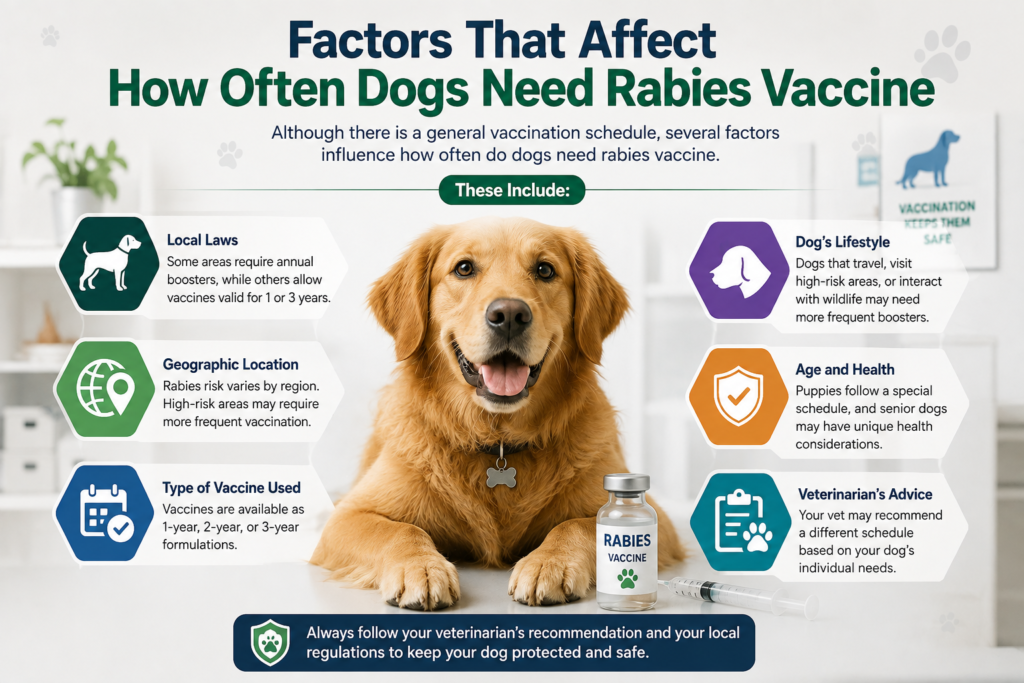
These include:
1. Local Laws
Some regions legally require annual vaccination, while others allow three-year vaccines.
2. Vaccine Type
Different rabies vaccines provide different durations of immunity.
3. Age
Puppies require an initial vaccination followed by a booster before entering the standard adult schedule.
4. Health Status
Dogs with certain medical conditions may need individualized vaccination plans.
5. Exposure Risk
Dogs that spend time outdoors, hunt, hike, or interact with wildlife may require closer monitoring and timely boosters.
Adult Rabies Vaccination Schedule
After your puppy receives its first rabies vaccine and the one-year booster, the schedule changes depending on the vaccine your veterinarian uses and the laws in your area.
Most healthy adult dogs receive a booster every one to three years. This is why many dog owners continue asking how often do dogs need rabies vaccine throughout their pet’s life.
A typical schedule looks like this:
| Dog’s Age | Rabies Vaccine |
| 12–16 weeks | First rabies vaccination |
| 1 year later | First booster |
| Every 1–3 years | Regular booster shots |
Never skip a booster without talking to your veterinarian, even if your dog rarely goes outside.
1-Year vs. 3-Year Rabies Vaccine
One of the biggest sources of confusion is whether dogs need a rabies vaccine every year.
The answer depends on the vaccine licensed for use in your area.
1-Year Rabies Vaccine
This vaccine provides immunity for one year and requires annual boosters. Some local governments or shelters require this schedule regardless of vaccine brand.
3-Year Rabies Vaccine
Many veterinarians administer a three-year rabies vaccine after the first annual booster. Scientific studies show that these vaccines provide long-lasting immunity when used correctly.
If you’re asking how often do dogs need rabies vaccine, your veterinarian can tell you whether your dog qualifies for the one-year or three-year schedule.
What Happens During a Rabies Vaccination Appointment?
A rabies vaccination appointment is usually quick and simple.
Your veterinarian will:
- Perform a physical examination.
- Check your dog’s overall health.
- Review previous vaccination records.
- Administer the rabies vaccine by injection.
- Observe your dog briefly afterward.
- Provide an updated rabies vaccination certificate.
The entire visit often takes less than 30 minutes.
Does the Rabies Vaccine Hurt Dogs?
Most dogs experience only mild discomfort from the injection.
Some dogs may briefly flinch during the shot but recover immediately.
Veterinarians use small needles designed to minimize discomfort.
Giving treats and praise afterward can help create a positive experience.
Possible Side Effects of the Rabies Vaccine
Like any vaccine, the rabies vaccine can cause mild side effects. Fortunately, serious reactions are very rare.
Common side effects include:
- Mild tiredness
- Slight fever
- Temporary soreness at the injection site
- Reduced appetite for one day
- Mild swelling where the vaccine was given
These symptoms usually disappear within 24 to 48 hours.
Rare Side Effects
Although uncommon, some dogs may experience allergic reactions.
Contact your veterinarian immediately if your dog develops:
- Difficulty breathing
- Facial swelling
- Severe vomiting
- Collapse
- Persistent hives
- Extreme weakness
Prompt treatment usually resolves allergic reactions successfully.
Can Senior Dogs Still Receive the Rabies Vaccine?
Yes.
Senior dogs still need protection against rabies.
Age alone is not a reason to stop vaccination.
Your veterinarian may adjust your dog’s healthcare plan based on underlying medical conditions, but healthy senior dogs generally continue receiving rabies boosters according to recommended schedules. Knowing how often do dogs need rabies vaccine helps ensure senior dogs remain protected against this deadly disease throughout their lives.
What If My Dog Has Never Been Vaccinated?
If you’ve adopted an adult dog with no vaccination records, your veterinarian will usually recommend treating your dog as unvaccinated.
The typical plan includes:
- Initial rabies vaccination
- Booster according to vaccine guidelines
- Future boosters every one to three years
This ensures your dog develops full immunity.
How Much Does a Rabies Vaccine Cost?
The cost varies depending on your location and veterinary clinic.
In many areas, a rabies vaccine costs between $20 and $60, although prices can be lower at community vaccination clinics.
Some clinics offer low-cost vaccination events that include:
- Rabies vaccination
- Health examination
- Microchipping
- Other core vaccines
Keeping your dog vaccinated is far less expensive than dealing with the consequences of rabies exposure.
What Happens If a Vaccinated Dog Is Bitten by a Rabid Animal?
If your vaccinated dog is exposed to a rabid animal, contact your veterinarian immediately.
Your veterinarian may recommend:
- A booster rabies vaccination
- Observation for signs of illness
- Reporting the incident to local animal health authorities
Because your dog is already vaccinated, the risk of developing rabies is extremely low.
What Happens If an Unvaccinated Dog Is Exposed?
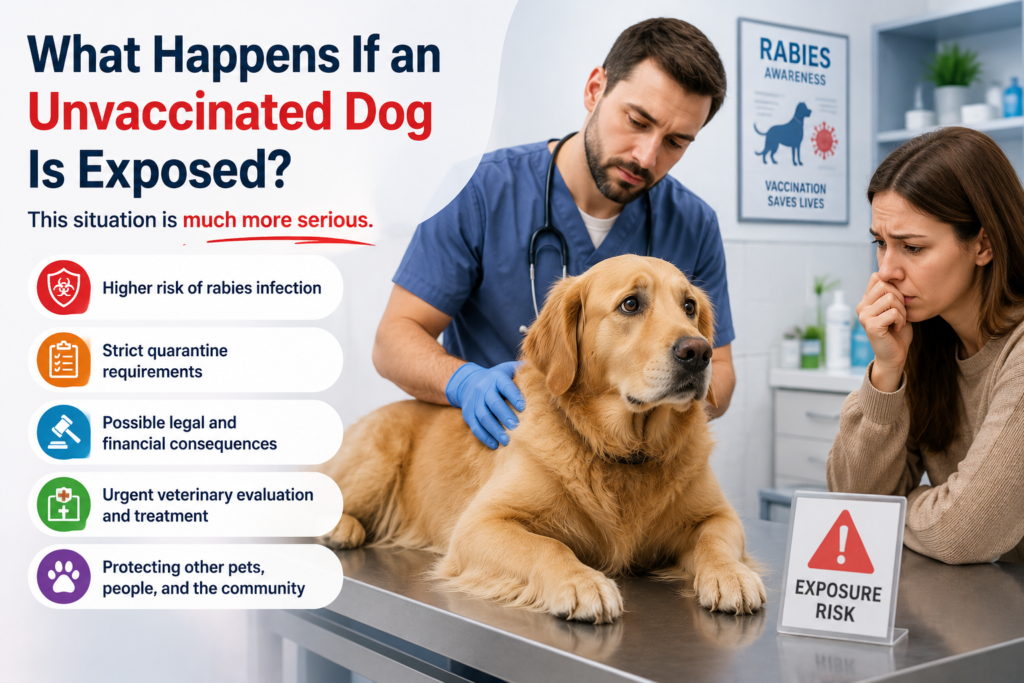
This situation is much more serious.
Depending on local laws, an unvaccinated dog may face:
- Strict quarantine
- Extended observation
- Emergency vaccination
- In severe cases, euthanasia if exposure risk is extremely high
This is one of the strongest reasons to understand how often do dogs need rabies vaccine and keep vaccinations current.
Can Dogs Receive Other Vaccines at the Same Visit?
Yes.
Many veterinarians administer rabies vaccines during routine wellness visits alongside other vaccinations, including:
- Distemper
- Parvovirus
- Adenovirus
- Bordetella
- Leptospirosis
- Lyme disease
Your veterinarian will determine the safest vaccination schedule based on your dog’s age and health.
Do Indoor Dogs Need Booster Shots?
Absolutely.
Many owners assume indoor dogs are safe from rabies.
However, exposure can still happen through:
- Bats entering homes
- Escaping through open doors
- Unexpected wildlife encounters
- Animal bites during walks
Indoor dogs should remain fully vaccinated throughout life.
Can Rabies Vaccination Prevent Human Infection?
Yes.
Vaccinating dogs is one of the most effective ways to prevent human rabies.
In many countries, widespread dog vaccination programs have dramatically reduced human rabies deaths.
Keeping your own dog vaccinated helps protect:
- Your family
- Your neighbors
- Other pets
- Local wildlife
- The entire community
Common Myths About Rabies Vaccines
Myth 1: Indoor Dogs Don’t Need Rabies Vaccines
False. Indoor dogs can still be exposed to rabid animals. If you’re wondering how often do dogs need rabies vaccine, indoor dogs should follow the same recommended vaccination schedule as outdoor dogs.
Myth 2: One Rabies Shot Lasts Forever
False. Immunity decreases over time, making booster vaccinations necessary. If you’re wondering how often do dogs need rabies vaccine, most dogs require booster shots every one to three years, depending on the vaccine and local regulations.
Myth 3: Rabies Vaccines Always Cause Serious Side Effects
False. Most dogs experience only mild, temporary reactions. If you’re wondering how often do dogs need rabies vaccine, following the recommended vaccination schedule is the safest way to protect your dog from this deadly disease.
Myth 4: Healthy Dogs Can’t Get Rabies
False. Any unvaccinated mammal can become infected if exposed. If you’re wondering how often do dogs need rabies vaccine, keeping your dog’s rabies vaccinations up to date is the best way to prevent infection and protect its long-term health.
Myth 5: Rabies Is Rare, So Vaccination Isn’t Necessary
lFalse. Rabies still exists in many parts of the world, making prevention essential. If you’re wondering how often do dogs need rabies vaccine, following the recommended vaccination schedule is the best way to protect your dog and help prevent the spread of this deadly disease.
Tips for Keeping Your Dog on Schedule
To avoid missing boosters:
- Save your vaccination certificate.
- Set calendar reminders.
- Schedule the next appointment before leaving the clinic.
- Keep digital copies of vaccine records.
- Ask your veterinarian when the next booster is due.
- Update records if you move to another state or country.
Staying organized makes it much easier to keep your dog protected.
Veterinary Recommendations
Veterinarians agree that rabies vaccination is one of the most important preventive measures for dogs.
Routine vaccination:
- Saves lives.
- Prevents disease outbreaks.
- Protects humans.
- Meets legal requirements.
- Supports responsible pet ownership.
If you’re ever unsure how often do dogs need rabies vaccine, your veterinarian is the best source of advice based on your dog’s health, age, lifestyle, and local regulations.
Frequently Asked Questions (FAQs)
1. How often do dogs need rabies vaccine?
The answer to how often do dogs need rabies vaccine depends on the vaccine used and your local laws. Most puppies receive their first rabies vaccine at 12–16 weeks of age, a booster one year later, and then additional boosters every one to three years.
2. Is the rabies vaccine legally required for dogs?
Yes. In many countries, states, and municipalities, rabies vaccination is required by law. Understanding how often do dogs need rabies vaccine helps you comply with local laws while keeping your dog protected against this deadly disease.
3. Can my dog skip a rabies booster if it stays indoors?
No. Even indoor dogs can be exposed to rabies through bats, wildlife, or accidental escapes. Understanding how often do dogs need rabies vaccine helps ensure your indoor dog stays protected with timely booster shots and routine vaccinations.
4. What happens if my dog’s rabies vaccine expires?
If your dog’s rabies vaccine expires, it may lose its protected status. Depending on local regulations, your veterinarian may recommend an immediate booster or restarting the vaccination schedule.
5. Are rabies vaccines safe for puppies?
Yes. Rabies vaccines are considered very safe when given at the recommended age of 12–16 weeks by a licensed veterinarian. If you’re wondering how often do dogs need rabies vaccine, puppies should receive their first rabies vaccine at the recommended age and continue with booster shots according to their veterinarian’s schedule.
6. Can senior dogs still receive rabies vaccines?
Absolutely. Healthy senior dogs should continue receiving rabies boosters according to their veterinarian’s recommendations unless a specific medical condition requires a different plan.
7. What are the side effects of the rabies vaccine?
Most dogs experience only mild side effects such as slight tiredness, soreness at the injection site, or a mild fever. Serious allergic reactions are rare but require immediate veterinary care.
8. How long does a rabies vaccine last?
Depending on the vaccine and local regulations, rabies vaccines typically protect dogs for one year or three years after the appropriate booster schedule has been completed. If you’re wondering how often do dogs need rabies vaccine, your veterinarian can recommend the correct booster schedule based on the vaccine used and your local laws.
9. Can a vaccinated dog still get rabies?
Although no vaccine offers a 100% guarantee, properly vaccinated dogs have an extremely low risk of developing rabies if they are exposed.
10. What should I do if my vaccinated dog is bitten by a wild animal?
Contact your veterinarian immediately. Your dog may need a booster shot and observation, even if it is already vaccinated. Knowing how often do dogs need rabies vaccine helps ensure your dog receives timely boosters and stays protected against this deadly disease.
11. Why is rabies vaccination so important?
Rabies is almost always fatal once symptoms appear. Vaccination is the most effective way to protect your dog, your family, and your community.
12. Can I vaccinate my dog against rabies at home?
No. In most places, rabies vaccines must be administered by a licensed veterinarian so that the vaccination is legally recognized.
13. Do all dog breeds need rabies vaccines?
Yes. Every dog breed, regardless of size or age, should receive rabies vaccination according to veterinary guidelines and local laws. Understanding how often do dogs need rabies vaccine helps ensure every dog remains protected against this deadly disease.
14. How can I remember my dog’s next rabies vaccine?
Ask your veterinarian for a reminder, keep your vaccination certificate in a safe place, and set a calendar alert on your phone. Staying informed about how often do dogs need rabies vaccine makes it easier to keep your dog’s vaccinations up to date and avoid missing important booster shots.
15. How often do dogs need rabies vaccine throughout life?
After the initial puppy vaccine and first booster, most dogs need a rabies vaccine every one to three years, depending on the vaccine used and the laws where you live.
Final Thoughts
Understanding how often do dogs need rabies vaccine is one of the most important responsibilities of every dog owner. Rabies is a deadly disease, but it is almost entirely preventable with timely vaccination.
Most puppies receive their first rabies vaccine between 12 and 16 weeks of age, followed by a booster one year later. After that, adult dogs generally receive boosters every one to three years, depending on the vaccine type and local regulations.
Keeping your dog’s rabies vaccination up to date not only protects your pet but also helps safeguard your family and community. Missing a booster can lead to legal complications, travel restrictions, and unnecessary health risks. Regular veterinary checkups ensure your dog stays healthy and protected throughout its life.
If you’re ever unsure how often do dogs need rabies vaccine, consult your veterinarian. They can recommend the best vaccination schedule based on your dog’s age, health, lifestyle, and local requirements.