
If you’ve ever wondered how long does it take a dog to digest food, you’re not alone. Many dog owners ask this question after changing their dog’s diet, giving medication, or noticing changes in bathroom habits. Understanding your dog’s digestive process can help you recognize what’s normal and identify signs of digestive problems early.
On average, it takes a dog between 8 and 12 hours to digest food, although complete digestion and elimination may take 12 to 24 hours depending on several factors such as age, breed, activity level, and the type of food eaten.
In this complete guide, we’ll explain how long does it take a dog to digest food, what affects digestion, the stages of digestion, signs of digestive issues, and how to support your dog’s digestive health.
Average Dog Digestion Time
The average healthy adult dog digests food in about:
| Digestion Stage | Average Time |
| Food reaches stomach | 10–30 minutes |
| Stomach digestion | 4–8 hours |
| Small intestine | 1–3 hours |
| Large intestine | 6–12 hours |
| Complete elimination | 12–24 hours |
Overall, most healthy dogs digest a normal meal within 8 to 12 hours, while waste may not be fully passed until the following day.
How Does a Dog’s Digestive System Work?
Understanding digestion helps answer how long does it take a dog to digest food.
1. Mouth
Understanding how long does it take a dog to digest food starts with the mouth. Dogs don’t chew food as thoroughly as humans. Most food is swallowed in large pieces after minimal chewing, while saliva mainly helps with swallowing rather than breaking down food.
2. Esophagus
The next stage in how long does it take a dog to digest food is the esophagus. Food travels quickly through the esophagus and reaches the stomach within seconds, where the main digestion process begins.
3. Stomach
The stomach uses strong acids and digestive enzymes to break food into smaller particles.
Food usually remains in the stomach for:
- 4–8 hours
- Longer after large meals
- Less time after smaller meals
4. Small Intestine
This is where nutrients are absorbed into the bloodstream.
Protein, fats, carbohydrates, vitamins, and minerals are processed here.
5. Large Intestine
Water is absorbed while waste is formed into stool before being eliminated.
Factors That Affect How Long It Takes a Dog to Digest Food
Several factors influence how long does it take a dog to digest food.
Age
Puppies
Puppies digest food much faster because they have higher metabolisms.
Average digestion:
- 4–8 hours
Adult Dogs
Healthy adult dogs usually digest meals in:
- 8–12 hours
Senior Dogs
Older dogs often digest food more slowly due to reduced metabolism.
Average digestion:
- 12–24 hours
Type of Food
Different foods digest at different speeds.
Dry Kibble
Dry food generally takes longer to digest because it contains less moisture.
Average:
8–10 hours
Wet Dog Food
Wet food contains more water and usually moves through the digestive tract faster.
Average:
4–6 hours
Fresh Dog Food
Fresh diets made from real meat and vegetables are often easier to digest.
Average:
6–8 hours
Raw Diet
Raw diets vary depending on ingredients but often digest relatively quickly in healthy dogs.
Meal Size
Large meals stay in the stomach longer.
Small meals digest more quickly.
This is why veterinarians often recommend feeding multiple smaller meals rather than one very large meal.
Dog Breed
Breed can also influence digestion.
Large breeds:
- Slower digestion
- Larger digestive tract
Small breeds:
- Faster metabolism
- Faster digestion
Exercise
Moderate exercise supports healthy digestion.
However, vigorous activity immediately after eating can increase the risk of bloat (gastric dilatation-volvulus), especially in large, deep-chested breeds.
Wait at least 1–2 hours after meals before intense exercise.
Hydration
Water is essential for proper digestion.
Dogs that don’t drink enough water may experience:
- Constipation
- Slower digestion
- Hard stools
Always provide clean, fresh water.
Health Conditions
Some medical issues slow digestion, including:
- Pancreatitis
- Intestinal blockage
- Inflammatory bowel disease
- Parasites
- Food allergies
- Diabetes
- Liver disease
If digestion suddenly changes, consult your veterinarian.
How Long Does It Take a Puppy to Digest Food?
Many owners specifically ask how long does it take a dog to digest food when they have a puppy.
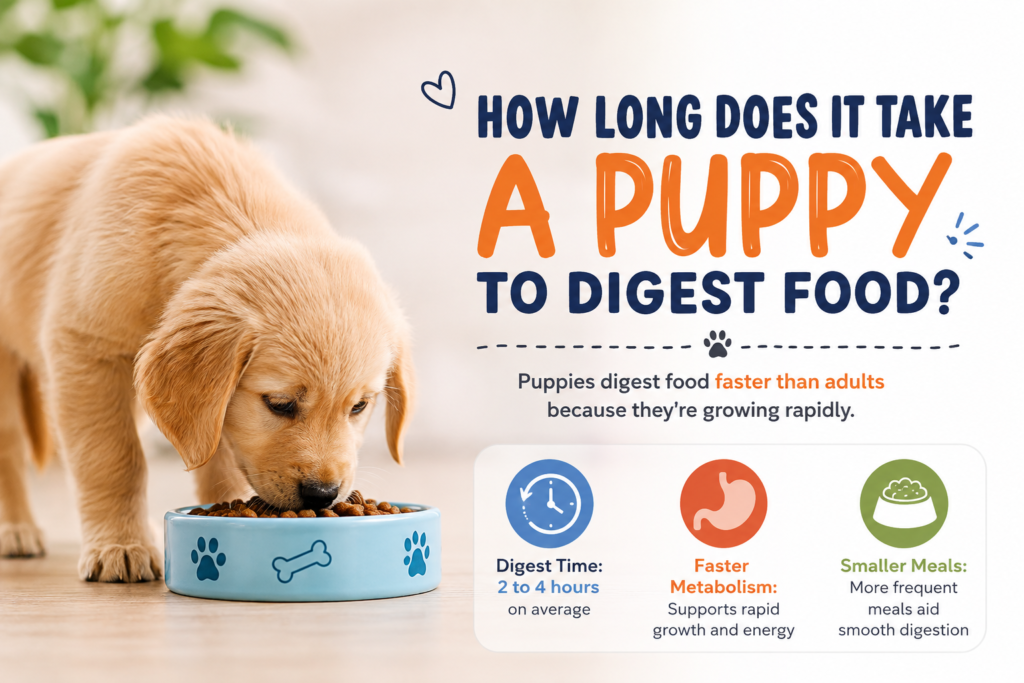
Puppies digest food faster than adults because they’re growing rapidly.
Typical digestion:
- 4–8 hours
Because of their fast metabolism, puppies usually need to eat:
- 3–4 meals daily
How Long Does It Take a Senior Dog to Digest Food?
Older dogs process food more slowly.
Digestion may take:
- 12–24 hours
Senior dogs also benefit from highly digestible diets and regular veterinary checkups.
How Long Does Dry Dog Food Take to Digest?
Dry kibble generally requires more time because moisture must first be absorbed.
Typical digestion time:
- 8–10 hours
Premium, highly digestible kibble may digest slightly faster.
How Long Does Wet Dog Food Take to Digest?
Wet food usually moves through the digestive tract more quickly.
Average digestion:
- 4–6 hours
Wet food is often recommended for dogs with dental issues or those needing extra hydration.
How Long Does Fresh Dog Food Take to Digest?
Fresh dog food is often easier for the digestive system to process.
Average digestion:
- 6–8 hours
Fresh diets may also improve stool quality in some dogs.
Signs Your Dog Is Digesting Food Normally
Healthy digestion usually includes:
- Normal appetite
- Regular bowel movements
- Firm stools
- No vomiting
- Healthy energy levels
- Minimal gas
- Comfortable abdomen
Signs of Poor Digestion
Contact your veterinarian if your dog has:
- Frequent vomiting
- Diarrhea lasting more than 24 hours
- Constipation
- Bloody stool
- Excessive gas
- Swollen abdomen
- Loss of appetite
- Weight loss
- Lethargy
These may indicate an underlying digestive disorder.
How to Improve Your Dog’s Digestion
If you’re concerned about how long does it take a dog to digest food, these tips can help support healthy digestion:
Feed High-Quality Food
Choose a balanced diet with high-quality protein and appropriate fiber.
Maintain a Consistent Feeding Schedule
Feed meals at the same times every day.
Avoid Sudden Diet Changes
Transition to new foods gradually over 7–10 days.
Provide Fresh Water
Proper hydration supports normal digestion and stool consistency.
Encourage Moderate Exercise
Daily walks help keep the digestive system moving.
Prevent Overeating
Use measured portions to avoid digestive discomfort.
Consider Probiotics
Your veterinarian may recommend probiotics for dogs with sensitive stomachs.
Can Stress Affect Digestion?
Yes.
Stress and anxiety may slow or upset digestion, leading to:
- Diarrhea
- Vomiting
- Loss of appetite
- Increased gas
Maintaining a calm routine can help reduce digestive stress.
When Should You Contact a Veterinarian?
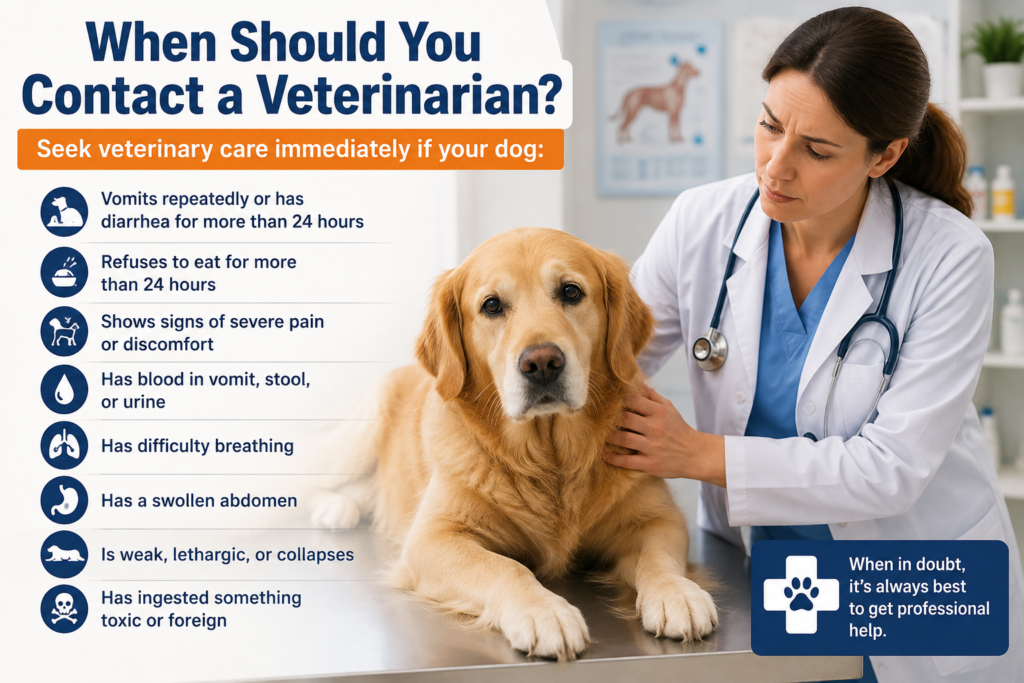
Seek veterinary care immediately if your dog:
- Cannot keep food down
- Has repeated vomiting
- Has severe diarrhea
- Has blood in stool
- Shows signs of abdominal pain
- Has a swollen belly
- Stops eating
- Appears weak or lethargic
Early treatment can prevent serious complications.
Frequently Asked Questions
How long does it take a dog to digest food completely?
Most dogs digest food in 8–12 hours, while complete elimination typically occurs within 12–24 hours.
Does wet food digest faster than dry food?
Yes. Wet food usually digests in 4–6 hours, while dry kibble often takes 8–10 hours.
Do puppies digest food faster?
Yes. Puppies typically digest meals within 4–8 hours because of their higher metabolism.
Can exercise affect digestion?
Yes. Moderate exercise supports digestion, but strenuous activity immediately after eating should be avoided.
How often should dogs poop after eating?
Most healthy dogs poop 1–3 times daily, depending on diet, age, and overall health.
Can dehydration slow digestion?
Yes. Insufficient water intake can contribute to slower digestion and constipation.
Final Thoughts
Understanding how long does it take a dog to digest food helps you better monitor your dog’s health and recognize when something may be wrong. While most healthy adult dogs digest food within 8 to 12 hours, several factors—including age, diet, meal size, activity level, and overall health—can influence digestion time. Feeding a high-quality diet, ensuring proper hydration, maintaining a consistent feeding schedule, and providing regular exercise all contribute to a healthy digestive system. If you notice persistent vomiting, diarrhea, constipation, or any sudden changes in your dog’s digestive habits, consult your veterinarian promptly to ensure your pet receives the care it needs.