
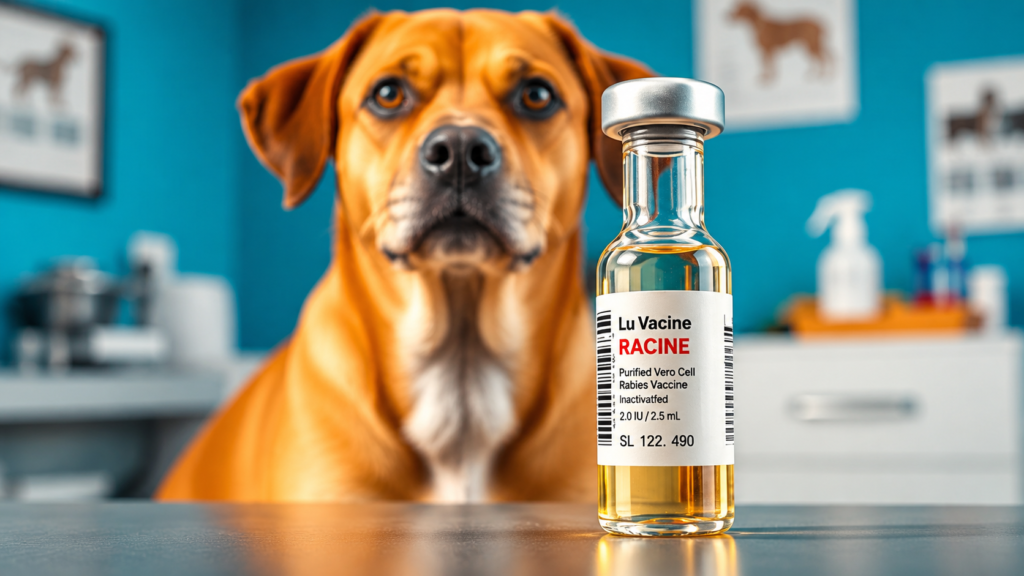
If you’re wondering how often does a dog need a rabies shot, you’re asking one of the most important questions about your dog’s health. Rabies is a deadly viral disease that affects the brain and nervous system. Once symptoms appear, there is no cure. Fortunately, routine rabies vaccination provides excellent protection and is required by law in many places.
Understanding how often does a dog need a rabies shot helps keep your pet healthy, protects your family, and ensures you stay compliant with local vaccination laws.
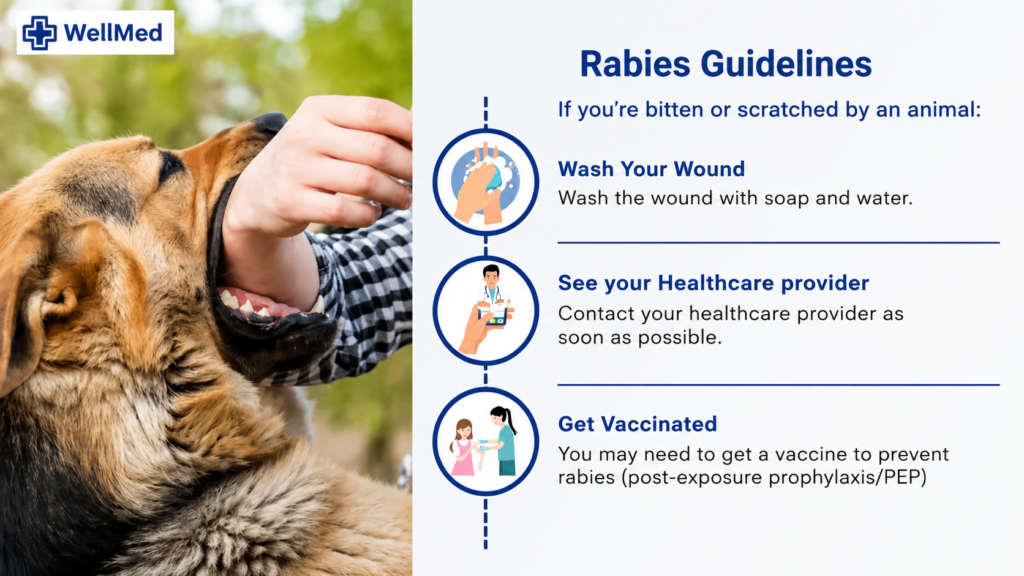
In this guide, you’ll learn the recommended rabies vaccine schedule, booster timing, possible side effects, and answers to the most common questions.
Why Is the Rabies Vaccine So Important?
Rabies is transmitted through the saliva of infected animals, usually by bites. Wild animals such as bats, raccoons, foxes, and skunks are common carriers.
Without vaccination, infected dogs almost always die after symptoms develop.
The rabies vaccine protects:
- Your dog
- Your family
- Other pets
- Your community
It is also legally required in many countries and states.
How Often Does a Dog Need a Rabies Shot?
The answer depends on:
- Your dog’s age
- Which vaccine is used
- Local vaccination laws
- Your veterinarian’s recommendation
For most dogs, the schedule looks like this:
| Dog’s Age | Rabies Vaccine |
| 12–16 weeks | First rabies shot |
| 1 year later | First booster |
| Every 1 or 3 years | Future boosters depending on vaccine and law |
This is the standard schedule recommended by many veterinary organizations.
So, how often does a dog need a rabies shot? Most adult dogs receive one every one to three years after their initial vaccination series.
When Should Puppies Get Their First Rabies Shot?
Most puppies receive their first rabies vaccine between 12 and 16 weeks of age.
This timing is important because:
- Their immune system is ready
- Maternal antibodies no longer interfere
- It provides long-term protection
Never vaccinate earlier unless specifically instructed by your veterinarian.
Why Does a Dog Need a Booster One Year Later?
Many dog owners ask, how often does a dog need a rabies shot, especially after their pet receives its first rabies vaccine. Some owners think one rabies vaccine lasts forever.
It doesn’t.
The booster given one year after the first vaccination strengthens your dog’s immune memory and provides longer-lasting protection. This booster is an important part of understanding how often does a dog need a rabies shot, as it helps ensure your dog stays protected against rabies.
After that booster, many dogs may qualify for a three-year rabies vaccine, depending on the vaccine used and your local vaccination regulations.
One-Year vs Three-Year Rabies Vaccines
Many people believe these are different vaccines.
Actually, they often contain the same ingredients.
The difference lies in:
- Licensing
- Label approval
- Local legal requirements
Some areas only recognize one-year vaccines, while others allow three-year boosters.
Always follow your veterinarian’s advice and local laws.
Factors That Affect How Often Does a Dog Need a Rabies Shot
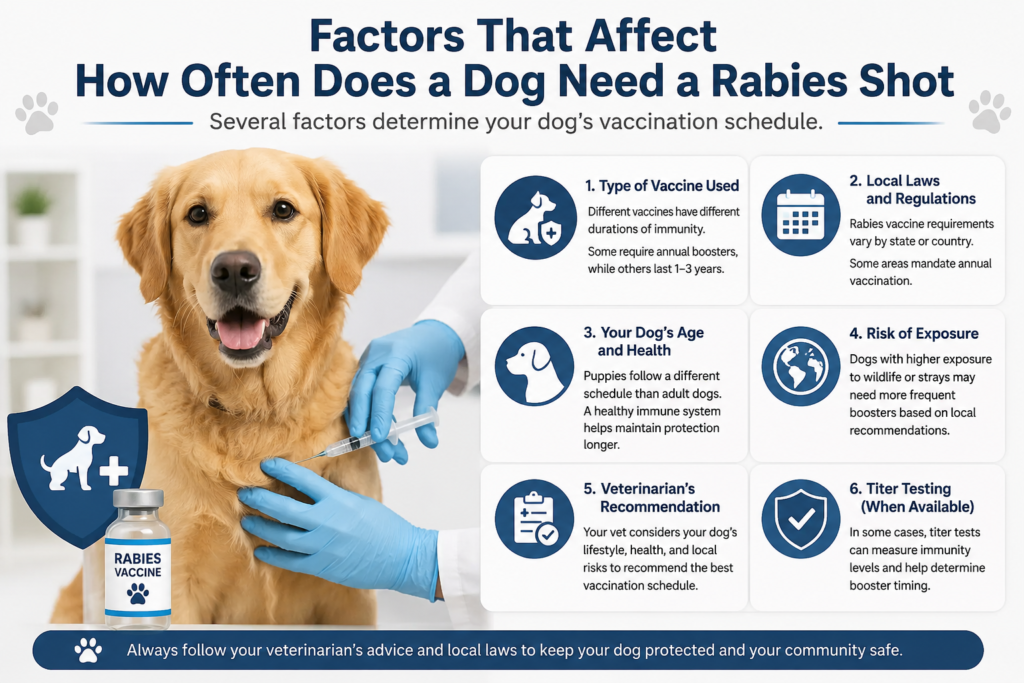
Several factors determine your dog’s vaccination schedule.
Age
Puppies require an initial vaccine followed by a booster.
Adults follow a regular schedule.
Local Laws
Some states or countries legally require vaccination every year.
Others allow every three years.
Always check your local regulations.
Vaccine Type
Some rabies vaccines are licensed for:
- One year
- Three years
Your veterinarian will choose the appropriate vaccine.
Health Status
Dogs with serious illnesses may require special vaccination planning.
Never skip vaccines without discussing it with your veterinarian.
Can a Dog Be Vaccinated Too Often?
Generally, veterinarians avoid giving unnecessary vaccines.
Rabies vaccines are administered according to approved schedules.
Giving extra rabies vaccines before they are due usually offers no additional benefit.
Always follow your veterinarian’s recommended schedule.
What Happens If a Dog Misses a Rabies Shot?
If your dog misses its rabies booster:
- Contact your veterinarian immediately.
- Your dog may need another vaccination.
- Some areas require restarting the vaccination schedule.
- Local quarantine rules may apply after exposure to wildlife.
Never wait if your dog’s rabies vaccine has expired.
Signs Your Dog Needs a Rabies Booster
Usually, dogs show no physical signs when a booster is due.
Instead:
- Check vaccination records.
- Use reminder apps.
- Ask your veterinary clinic for annual reminders.
Are Rabies Vaccines Safe?
Yes.
Rabies vaccines have been safely used for decades.
Most dogs experience no problems.
Possible mild side effects include:
- Sleepiness
- Mild soreness
- Slight swelling
- Reduced appetite for a day
Serious allergic reactions are extremely rare but require immediate veterinary care.
How Much Does a Rabies Shot Cost?
Costs vary depending on:
- Your location
- Veterinary clinic
- Vaccine type
- Local vaccination clinics
Generally, owners can expect to pay between $20 and $60 for a rabies vaccination, although prices may differ.
Many community vaccination events offer lower-cost options.
What Happens If an Unvaccinated Dog Is Bitten?
This situation can become serious.
Depending on local laws, authorities may require:
- Immediate vaccination
- Strict quarantine
- Veterinary observation
- Additional testing
Vaccinated dogs usually face much simpler procedures after exposure.
Can Indoor Dogs Skip Rabies Vaccines?
No.
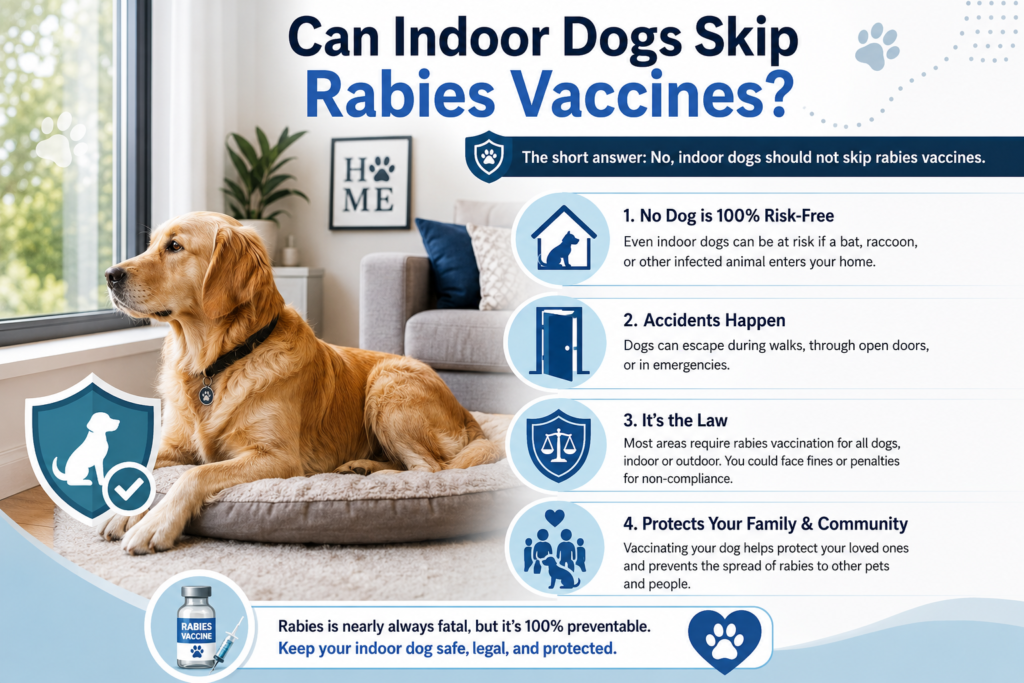
Even dogs that stay indoors can:
- Escape outside
- Encounter bats
- Meet infected wildlife
- Be exposed through unexpected situations
Rabies vaccination is recommended for both indoor and outdoor dogs.
Do Senior Dogs Still Need Rabies Shots?
Yes.
Age alone is not a reason to stop rabies vaccination.
Older dogs remain at risk if exposed.
Your veterinarian may adjust other vaccines based on health, but rabies vaccination usually continues according to legal requirements.
Tips to Keep Your Dog’s Rabies Vaccine Up to Date
Follow these simple tips:
- Keep vaccination certificates in a safe place.
- Schedule appointments before the due date.
- Ask for reminder texts or emails from your veterinary clinic.
- Maintain an updated pet health record.
- Never ignore booster appointments.
Common Myths About Rabies Vaccination
Myth 1: One Rabies Shot Lasts for Life
False.
Dogs need booster vaccinations throughout their lives.
Myth 2: Indoor Dogs Don’t Need Rabies Shots
False.
Indoor dogs can still be exposed to rabies.
Myth 3: Rabies Is No Longer a Problem
False.
Rabies continues to affect wildlife in many regions around the world.
Myth 4: Puppies Can Wait Until They’re Older
False.
Puppies should receive their first rabies vaccine between 12 and 16 weeks unless your veterinarian recommends otherwise.
Frequently Asked Questions
How often does a dog need a rabies shot?
How often does a dog need a rabies shot? Most adult dogs need a rabies booster every one to three years, depending on the vaccine used, their vaccination history, and local regulations. Following the recommended schedule helps keep your dog protected against rabies throughout its life.
At what age should puppies get a rabies shot?
Most puppies receive their first rabies vaccine between 12 and 16 weeks of age. Understanding how often does a dog need a rabies shot starts with giving puppies their first rabies vaccination at the recommended age.
Is the rabies vaccine legally required?
In many states, provinces, and countries, yes. Requirements vary by location, so knowing how often does a dog need a rabies shot according to your local laws is important for staying compliant.
Can a vaccinated dog still get rabies?
The rabies vaccine is highly effective, but no vaccine offers a 100% guarantee. Following the recommended schedule for how often does a dog need a rabies shot provides the best possible protection.
What if my dog’s rabies vaccine expires?
Contact your veterinarian as soon as possible to determine the next steps and ensure your dog is protected and compliant with local regulations. Keeping track of how often does a dog need a rabies shot helps prevent your dog’s vaccination from expiring.
American Veterinary Medical Association (AVMA)
Final Thoughts
Understanding how often does a dog need a rabies shot is essential for every responsible pet owner. Puppies typically receive their first rabies vaccine between 12 and 16 weeks of age, followed by a booster one year later. After that, most dogs receive boosters every one to three years, depending on the vaccine and local laws.
Keeping your dog’s rabies vaccination up to date not only protects your pet from a deadly disease but also helps safeguard your family and community. Work with your veterinarian to maintain the correct vaccination schedule and never miss a booster appointment.