
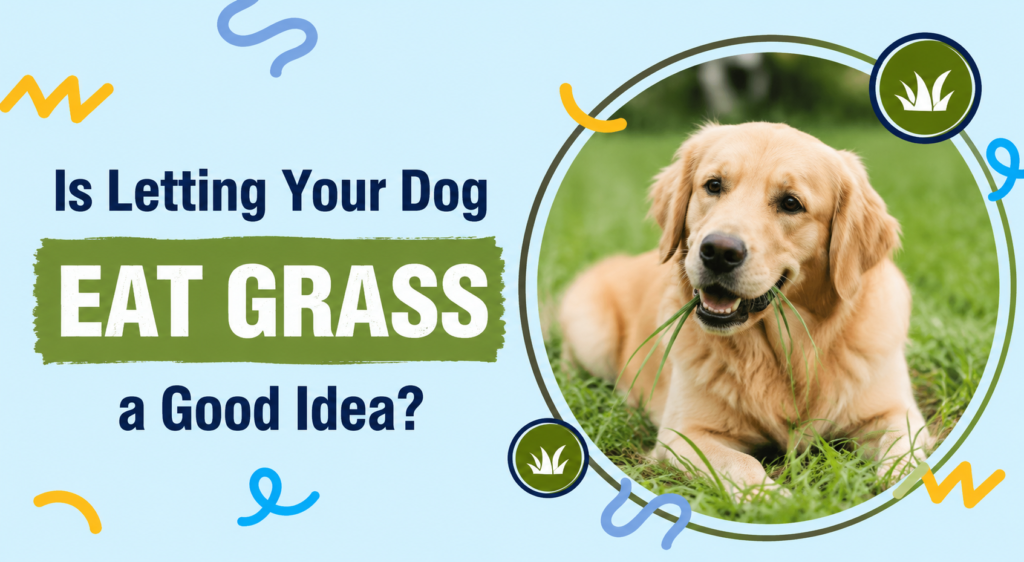
If you have ever watched your dog stop during a walk, lower its head, and start chewing on grass, you may have asked yourself, should dogs eat grass? This is one of the most common questions dog owners have about unusual eating habits. Some dogs occasionally nibble on grass and continue their day as if nothing happened, while others may spend several minutes grazing whenever they go outside.
The good news is that occasional grass eating does not automatically mean your dog is sick. Many dogs eat grass without developing any serious problems. However, there are also situations where grass eating can expose a dog to chemicals, parasites, toxic plants, or other contaminants.

So, should dogs eat grass? The answer depends on the dog’s overall health, how much grass it eats, where the grass grows, and whether the grass has been exposed to potentially harmful substances.
This detailed guide explains everything dog owners should know about grass eating, including possible reasons for the behavior, safety concerns, puppies and grass, vomiting, lawn chemicals, excessive grass eating, and when veterinary attention may be necessary.
Should Dogs Eat Grass?
The simple answer is that dogs do not need grass as part of their regular diet, but occasional consumption of clean, untreated grass may not cause problems for many healthy dogs.
When considering should dogs eat grass, it is important to understand the difference between a dog occasionally chewing a few blades and a dog constantly grazing on large amounts.
Dogs have different habits and personalities. Some dogs may completely ignore grass, while others seem determined to eat it whenever they get outside.
Occasional grass eating can be a normal exploratory or behavioral activity. Dogs experience the world through smell, taste, and texture, so grass can simply be interesting to them.
However, you should not intentionally encourage your dog to eat grass. Grass growing in an unfamiliar location may have been treated with pesticides, herbicides, fertilizers, or other lawn products. It may also be contaminated with animal feces, parasites, bacteria, or toxic plants.
Therefore, should dogs eat grass is not just a question about the grass itself. You also need to consider the environment.
Why Do Dogs Eat Grass?
One reason should dogs eat grass is such a common question is that there is no single explanation for the behavior.
Different dogs may eat grass for completely different reasons. Some may enjoy it, some may be curious, and some may simply have developed a habit.
Understanding the possible reasons can help you decide whether your dog’s behavior appears harmless or deserves closer attention.
Grass May Simply Taste Good to Your Dog
Some dogs may genuinely enjoy chewing grass, which is one reason many owners ask, should dogs eat grass?
Fresh grass can have an appealing smell, taste, and texture. Dogs do not necessarily need a medical reason to eat something unusual. Just as some dogs enjoy chewing certain toys, they may enjoy chewing plants. When considering should dogs eat grass, it is important to remember that occasional grass eating does not always indicate a health problem.
If your dog occasionally eats a small amount of clean grass and otherwise behaves normally, the behavior may simply be a preference. In most cases, should dogs eat grass depends on the amount of grass eaten, where the grass grows, and whether it has been exposed to chemicals or other contaminants.
Curiosity Can Lead to Grass Eating
Dogs investigate their surroundings using their mouths as well as their noses, which is one reason owners may wonder, should dogs eat grass?
A dog walking through a new environment may smell grass, investigate it, and take a bite. Puppies are especially curious and may try to eat many things they encounter outdoors.
In this situation, should dogs eat grass may be less about nutrition and more about normal exploration.
Grass Eating Can Become a Habit
Some dogs develop routines around eating grass.
For example, a dog may learn that every time it enters the backyard, it can spend a few minutes grazing. If nothing unpleasant happens, the behavior may continue.
Over time, grass eating can become a normal part of the dog’s outdoor routine.
Boredom May Contribute
Dogs need both physical exercise and mental stimulation.
A dog that spends a lot of time outside without anything interesting to do may look for its own activities. Grass eating can become one of those activities.
Providing walks, training, interactive toys, scent games, and supervised play may reduce boredom-related behaviors.
Stress or Anxiety May Influence Repetitive Behaviors
Some dogs develop repetitive behaviors when they are stressed, anxious, frustrated, or understimulated.
Grass eating alone does not prove that a dog is anxious. However, if your dog also shows pacing, excessive licking, whining, destructive behavior, hiding, or other unusual behaviors, it may be useful to discuss the situation with a veterinarian or qualified behavior professional.
Should Dogs Eat Grass When They Have an Upset Stomach?
One of the biggest myths surrounding should dogs eat grass is the belief that dogs automatically eat grass when they have an upset stomach so they can make themselves vomit.
Some dogs may vomit after eating grass, but that does not mean every dog eats grass to induce vomiting.
Many dogs eat grass without vomiting at all.
Because of this, grass should not be considered a treatment for stomach problems. If your dog has an upset stomach, giving it access to grass is not a reliable way to solve the problem.
Instead, monitor your dog and look for additional symptoms.
If vomiting is repeated, severe, or accompanied by diarrhea, weakness, abdominal pain, blood, loss of appetite, or unusual behavior, contact your veterinarian.
Can Dogs Eat Grass Without Vomiting?
Yes. Many dogs eat grass without vomiting.
A dog may chew several blades of grass, swallow them, and continue walking or playing normally.
This is one reason the idea that every dog eats grass to vomit is misleading.
If your dog occasionally eats grass but does not vomit and has no other symptoms, there may be no immediate reason to assume that something is wrong.
Still, it is wise to prevent your dog from eating grass in areas where you cannot determine whether it is safe.
Should Dogs Eat Grass From the Backyard?
If your dog likes eating grass in the backyard, you should first consider how the yard is maintained.
A private lawn may appear safe, but grass can become dangerous if it has been exposed to chemicals or contaminated by animal waste.
Before allowing your dog to spend time grazing, make sure the area is free from:
- Pesticides
- Herbicides
- Fertilizers
- Toxic plants
- Animal feces
- Standing water
- Moldy material
- Trash
- Sharp objects
- Chemical spills
If you use lawn treatments, follow the product instructions carefully and keep your dog away from treated areas according to the recommended safety directions.
When you are unsure whether a lawn product is safe for pets, do not allow your dog to eat the grass.
Should Dogs Eat Grass From Public Parks?
Public parks can present additional risks because you may not know exactly how the grass has been treated.
Municipal or privately maintained lawns may be exposed to fertilizers, weed-control products, pesticides, or other chemicals.
There may also be waste from other animals.
For this reason, should dogs eat grass in public areas is a question that should be approached cautiously.
It is generally safer to keep your dog from grazing on grass in locations where you cannot confirm that the area is pet-safe.
Can Puppies Eat Grass?
Puppies are naturally curious, and chewing grass may be part of their exploration.
However, puppies can be less selective than adult dogs. A puppy may chew grass while also swallowing dirt, insects, leaves, small pieces of debris, or other material.
That means puppies should be supervised carefully outdoors.
If your puppy repeatedly picks things up from the ground, training commands such as “leave it” can help prevent it from swallowing potentially dangerous objects.
When considering should dogs eat grass, remember that puppies may need extra supervision because they are still learning what is safe to eat.
Is Grass Safe for Dogs?
Grass itself is not necessarily poisonous to dogs, but the grass your dog encounters may contain harmful substances.
Possible hazards include chemicals used to maintain lawns, contaminated soil, animal feces, parasites, bacteria, or toxic plants growing among the grass.
This means that even if a particular type of grass is harmless, the environment around it may not be.
A dog that eats grass from a clean, untreated area is in a different situation from a dog eating grass beside a road or on a chemically treated lawn.
Should Dogs Eat Grass That Has Been Treated With Chemicals?
Dogs should not be allowed to eat grass that may have been exposed to potentially harmful lawn chemicals.
Depending on the product, chemicals can remain on grass and soil for a period of time.
If you have recently applied a lawn product, follow its instructions regarding when pets can safely return to the treated area.
Do not assume that a lawn is safe simply because the grass looks dry or normal.
If your dog accidentally eats grass that you suspect has been contaminated with a chemical product, contact a veterinarian for guidance.
Can Grass Cause Digestive Problems?
Eating grass can sometimes be followed by digestive symptoms.
Some dogs may experience vomiting or diarrhea after eating large amounts of grass. In other cases, the grass may not be the actual cause, and the dog may already have an underlying digestive problem.
If your dog eats grass and then develops repeated vomiting, persistent diarrhea, abdominal discomfort, weakness, or refuses food, do not assume the grass is the only explanation.
A veterinarian can help determine what is actually happening.
Should Dogs Eat Grass Every Day?
Occasional grass eating is generally less concerning than excessive or sudden grass eating.
If your dog eats a few blades every now and then and otherwise remains healthy, you may simply need to supervise the behavior.
However, if your dog suddenly begins eating grass every day or spends a large part of every outdoor session grazing, it is worth paying attention.
Ask yourself:
- Did the behavior recently start?
- Is your dog eating much more grass than before?
- Is your dog vomiting?
- Has the appetite changed?
- Is there diarrhea?
- Does your dog seem uncomfortable?
- Has your dog’s energy level changed?
- Is your dog losing weight?
If grass eating is accompanied by other changes, talk to your veterinarian.
Is Excessive Grass Eating a Problem?
There is no single amount of grass that is considered excessive for every dog.
The pattern matters more than a specific number of blades.
A dog that takes a few bites during a walk is different from a dog that repeatedly stops walking to consume large quantities of grass.
Excessive grass eating may also create a risk of swallowing other material mixed into the grass.
If you cannot easily redirect your dog or the behavior has become persistent, discuss it with your veterinarian.
Should Dogs Eat Grass Because They Need More Fiber?
Dogs require appropriate dietary fiber, but grass should not be used as a substitute for a balanced diet.
If you are concerned that your dog is not receiving enough fiber, talk to your veterinarian about the dog’s food and nutritional needs.
Do not assume that grass eating automatically means your dog has a nutritional deficiency.
A dog can eat grass while consuming a nutritionally complete diet.
Does Grass Eating Mean a Dog Has a Vitamin Deficiency?
Not necessarily.
It is common for owners to assume that a dog eating unusual things must be missing a vitamin or mineral.
However, grass eating alone does not prove that your dog has a nutritional deficiency.
Dogs may eat grass for behavioral reasons, curiosity, taste, or habit.
If your dog has other signs such as poor coat condition, weight changes, chronic digestive problems, weakness, or reduced appetite, a veterinarian can help determine whether there is an underlying nutritional or medical issue.
Why Does My Dog Eat Grass and Then Vomit?
If your dog eats grass and vomits afterward, it can be tempting to assume that the grass caused the vomiting or that your dog deliberately ate grass to make itself sick.
The actual situation may be more complicated.
The dog may already have had an upset stomach. The grass may have irritated the stomach. Or the vomiting may have happened for an entirely different reason.
A single episode of vomiting in an otherwise healthy dog may not always indicate an emergency, but repeated vomiting should be taken seriously.
If vomiting continues or is accompanied by blood, severe pain, weakness, dehydration, or refusal to eat, contact your veterinarian.
Should Dogs Eat Grass When They Are Hungry?
Some dogs may eat grass while outside regardless of whether they have recently eaten.
Grass should not be considered a meal or a replacement for dog food.
If your dog seems unusually hungry all the time and is also eating grass frequently, mention this to your veterinarian. Changes in appetite can sometimes provide useful information about a dog’s health.
Make sure your dog is receiving an appropriate amount of complete and balanced food for its age, size, activity level, and health status.
Can Dogs Eat Long Grass?
Long grass can be more difficult to evaluate and may hide other materials.
Tall grass may contain insects, animal feces, sharp plant material, or other objects that are difficult to see.
For this reason, it is better to discourage your dog from eating large amounts of long grass, particularly in unfamiliar areas.
Supervising your dog outdoors can help prevent unwanted grazing.
Can Grass Cause a Blockage?
A small amount of grass usually passes through the digestive system without causing a problem in many dogs.
However, consuming large amounts of plant material can potentially contribute to digestive problems. The risk can also increase if the dog swallows grass together with other foreign materials.
If your dog has persistent vomiting, constipation, severe abdominal pain, bloating, weakness, or cannot keep food or water down, veterinary evaluation is important.
Should Dogs Eat Grass During Walks?
Some dogs naturally stop during walks to chew grass.
If you do not want your dog to eat grass, you can gently redirect it and continue walking.
Training your dog to respond to commands such as “leave it” can make walks easier.
You can also carry small training treats and reward your dog for walking past grass without stopping to eat it.
Avoid physically punishing your dog for grass eating. Positive reinforcement is usually a more useful approach for changing unwanted behavior.
How to Stop a Dog From Eating Grass
If you decide that you do not want your dog eating grass, consistency is important.
Teach “Leave It”
Start training indoors in a quiet environment. Once your dog understands the command, gradually practice outdoors.
Reward your dog when it ignores grass after you give the command.
Redirect the Behavior
If your dog begins grazing, redirect its attention to you, a toy, a training exercise, or another safe activity.
Increase Exercise
Make sure your dog receives appropriate physical activity.
A dog that is mentally and physically engaged may have less interest in repetitive outdoor behaviors.
Offer Mental Stimulation
Puzzle toys, scent games, training exercises, and interactive activities can give your dog something more rewarding to do.
Supervise the Yard
Do not allow your dog to roam unsupervised in areas where it can consume large quantities of grass or encounter chemicals.
Should Dogs Eat Grass If They Have a Sensitive Stomach?
Dogs with sensitive digestive systems may react differently to eating grass.
If your dog frequently develops vomiting or diarrhea after eating grass, it is better to prevent the behavior and discuss the pattern with your veterinarian.
Your veterinarian may also evaluate your dog’s diet and digestive health if stomach problems are recurring.
Do not assume that grass is the solution for digestive discomfort.
What If My Dog Eats Grass and Seems Completely Healthy?
If your dog occasionally eats a small amount of clean grass and remains energetic, eats normally, drinks normally, and has normal bowel movements, you may simply monitor the behavior.
Many owners become concerned because they see their dog eating grass even though there are no other signs of illness.
In these situations, the behavior may simply be a normal habit.
Still, make sure your dog is not eating grass from areas treated with chemicals or contaminated with animal waste.
What If My Dog Suddenly Starts Eating Grass?
A sudden change in behavior is worth monitoring.
If your dog previously ignored grass and suddenly begins eating large amounts, consider whether anything else has changed.
For example, there may have been a change in diet, routine, exercise, environment, stress, or general health.
If the new grass-eating behavior continues or occurs alongside vomiting, diarrhea, appetite changes, weight loss, pain, or low energy, speak with your veterinarian.
Should Dogs Eat Grass Instead of Dog Food?
Absolutely not.
Grass cannot provide the complete nutritional balance that a dog needs.
Dogs require appropriate levels of protein, fat, carbohydrates, vitamins, minerals, and other nutrients. A complete and balanced diet should be the foundation of your dog’s nutrition.
Grass may be something your dog occasionally chews, but it should never replace normal meals.
If your dog refuses its regular food and begins eating large amounts of grass instead, contact your veterinarian.
How to Make Your Yard Safer for a Dog That Eats Grass
If your dog loves spending time in the yard, you can reduce risks by maintaining a pet-friendly environment.
Avoid allowing your dog to access areas recently treated with lawn chemicals. Store fertilizers, pesticides, weed killers, and other garden products securely away from pets.
Regularly remove animal feces from the yard.
Check for toxic plants and remove plants that could be dangerous if swallowed.
Keep trash, chemicals, sharp objects, and other hazards out of your dog’s reach.
A safer yard does not guarantee that your dog will never become sick, but it can significantly reduce unnecessary risks.
What Should You Do If Your Dog Eats Grass With Fertilizer?
If you know or suspect that your dog has eaten grass recently treated with fertilizer, check the product label for safety information and contact your veterinarian if you are concerned.
Do not induce vomiting unless a veterinarian specifically tells you to do so.
The appropriate response can depend on the product, the amount consumed, the dog’s size, and the dog’s symptoms.
If your dog develops vomiting, excessive drooling, weakness, tremors, difficulty breathing, or other concerning signs, seek veterinary help promptly.
What Should You Do If Your Dog Eats Grass With Pesticide?
Pesticide exposure can be more concerning than ordinary grass eating.
If you suspect that your dog has consumed pesticide-treated grass, contact a veterinarian and provide information about the product if possible.
Keep the product container or label available so the veterinarian can identify the ingredients.
Do not wait for serious symptoms before asking for advice if you know your dog has been exposed to a potentially harmful chemical.
Should Dogs Eat Grass From the Side of the Road?
It is better to prevent dogs from eating grass along roadsides.
Roadside grass can be exposed to vehicle pollution, litter, chemicals, animal waste, and other contaminants.
You may also have no way of knowing whether the area has been treated with weed-control products.
During walks, redirect your dog away from roadside grass and encourage it to continue walking.
Should Dogs Eat Grass With Animal Feces Nearby?
Dogs should not be encouraged to eat grass contaminated with animal feces.
Animal waste can contain bacteria, parasites, and other organisms that may cause illness.
If your dog frequently tries to eat grass where other animals have been defecating, training and supervision are especially important.
Keep your own yard clean and remove dog waste regularly.
Can Grass Eating Be Prevented Completely?
It may not be possible to completely stop every dog from ever eating grass.
Some dogs strongly enjoy the behavior, and occasional grazing may continue despite training.
The goal does not necessarily have to be eliminating every single bite. Instead, focus on preventing access to unsafe grass and stopping excessive consumption.
Good supervision, training, appropriate exercise, and a safe outdoor environment can make a significant difference.
When Should You Call a Veterinarian?
The question should dogs eat grass becomes more important when grass eating occurs with other symptoms.
Contact your veterinarian if your dog has:
- Repeated vomiting
- Persistent diarrhea
- Blood in vomit or stool
- Severe abdominal pain
- Swollen or painful abdomen
- Loss of appetite
- Significant weakness
- Extreme lethargy
- Unexplained weight loss
- Excessive drooling
- Difficulty breathing
- Tremors
- Suspected poisoning
- A sudden and persistent change in eating behavior
You should also seek veterinary advice if your dog repeatedly eats large amounts of grass and you cannot determine why.
Frequently Asked Questions About Should Dogs Eat Grass
Should dogs eat grass every day?
Dogs do not need grass every day. Occasional grazing may be harmless for some dogs, but daily or excessive grass eating should be monitored, especially if it is a new behavior or occurs with other symptoms.
Should dogs eat grass to make themselves vomit?
Not necessarily. Some dogs vomit after eating grass, but many dogs eat grass without vomiting. Grass should not be used as a treatment for an upset stomach.
Should dogs eat grass from a treated lawn?
No. Dogs should not be allowed to eat grass that may contain potentially harmful pesticides, herbicides, fertilizers, or other chemicals.
Should dogs eat grass if they are healthy?
A healthy dog may occasionally eat a small amount of clean grass without experiencing problems. However, grass is not necessary for a healthy diet.
Should dogs eat grass when they have diarrhea?
Grass should not be used as a treatment for diarrhea. If your dog has persistent diarrhea, contact a veterinarian for appropriate advice.
Should dogs eat grass when they are vomiting?
No. Do not rely on grass to treat vomiting. Repeated vomiting can have many causes and may require veterinary evaluation.
Should dogs eat grass in public parks?
It is safer to discourage grass eating in unfamiliar public areas because you may not know whether the grass has been treated with chemicals or contaminated by animals.
Should dogs eat grass if they have a balanced diet?
A balanced diet does not necessarily stop a dog from eating grass. Some dogs eat grass simply because they enjoy it or have developed the habit.
Should dogs eat grass if they are puppies?
Puppies may chew grass out of curiosity, but they should be supervised carefully because they may also swallow dirt, feces, insects, toxic plants, or foreign objects.
Should dogs eat grass if they seem sick?
No. If your dog seems sick, grass should not be considered a treatment. Monitor the symptoms and contact your veterinarian when appropriate.
Final Thoughts: Should Dogs Eat Grass?
So, should dogs eat grass? There is no universal reason to assume that every dog eating grass is sick or that every dog needs to stop immediately. Many healthy dogs occasionally chew or eat small amounts of grass without experiencing serious problems.
At the same time, grass is not a required part of a dog’s diet. The biggest concern is often what may be on or around the grass rather than the grass itself.
Avoid letting your dog eat grass that has been treated with potentially harmful chemicals, contaminated with animal waste, growing around toxic plants, or located in an area where you cannot determine whether it is safe.
If your dog occasionally eats a few blades of clean grass and continues to behave normally, you can usually monitor the behavior. If your dog begins eating grass excessively, suddenly changes its eating habits, vomits repeatedly, develops diarrhea, loses its appetite, appears weak, or shows other concerning symptoms, contact your veterinarian.
Ultimately, should dogs eat grass is best answered by considering the individual dog and the environment. Occasional grazing may be harmless, but dogs do not need grass to meet their nutritional requirements. Providing a balanced diet, regular exercise, mental stimulation, safe outdoor areas, and appropriate supervision is the best way to protect your dog’s health.