

Many dog owners enjoy sharing healthy snacks with their furry companions, but not every fruit is safe for dogs. One common question is, can dogs eat figs? The short answer is yes, dogs can eat figs in moderation, but there are important precautions every pet owner should know before offering this sweet fruit.
Figs are packed with natural fiber, vitamins, minerals, and antioxidants that can provide some health benefits. However, they also contain natural sugars and compounds that may cause digestive upset or allergic reactions in some dogs. While the fruit itself can be safe in small amounts, fig leaves and the sap from fig trees are toxic to dogs and should always be avoided.
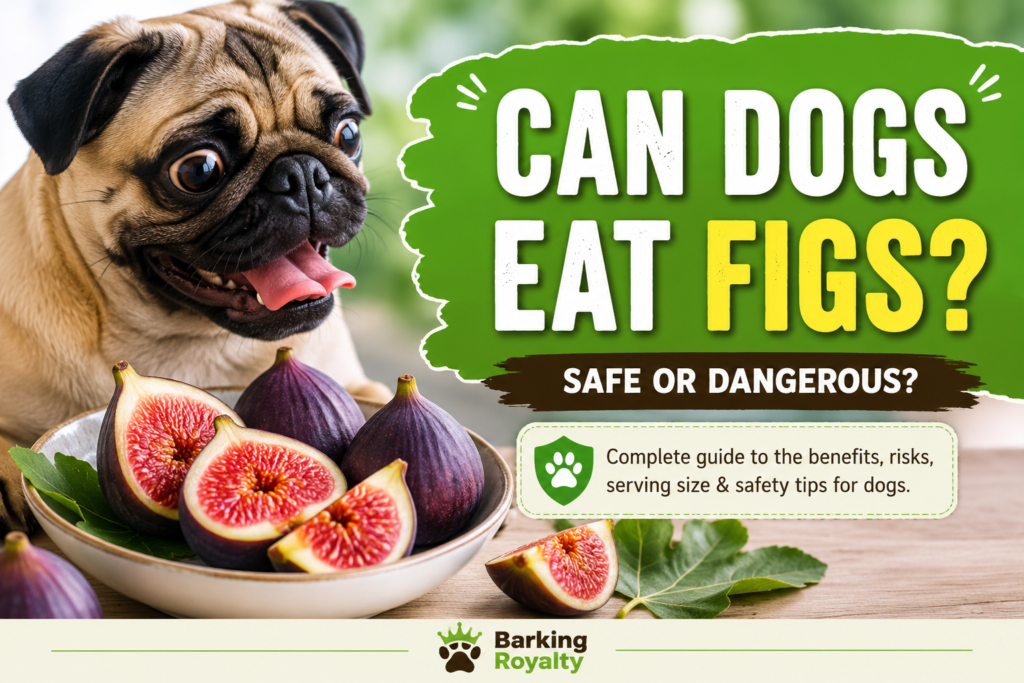
Understanding the difference between safe and unsafe parts of the fig plant is essential. This guide explains everything you need to know about can dogs eat figs, including their nutritional value, benefits, risks, proper serving sizes, and what to do if your dog accidentally eats a fig leaf or too many figs.
By the end of this article, you’ll know exactly how to feed figs safely while protecting your dog’s health.
Can Dogs Eat Figs?
Yes, Dogs Can Eat Figs in Moderation
So, can dogs eat figs? Yes, healthy dogs can safely eat fresh, ripe figs in small amounts as an occasional treat.
Yes, fresh figs are not toxic like grapes or raisins. Instead, they contain beneficial nutrients that may support your dog’s digestive system, immune health, and overall well-being. However, moderation is the key when deciding can dogs eat figs as a treat. Feeding too many figs can cause stomach upset because of their high fiber and natural sugar content. If you’re wondering can dogs eat figs regularly, the answer is no—they should only be offered occasionally as part of a balanced diet.
Veterinarians generally recommend that treats, including fruits like figs, should make up no more than 10% of your dog’s daily calorie intake.
If you are wondering Can dogs eat figs?, start by offering only a tiny piece if your dog has never eaten figs before. Monitor your dog closely for any signs of digestive discomfort or allergic reactions.
Quick Answer
Can dogs eat figs?
✅ Yes, in small amounts.
Can dogs eat fresh figs?
✅ Yes.
Can dogs eat dried figs?
⚠️ Not recommended because they contain concentrated sugar.
Can dogs eat fig leaves?
❌ No. Fig leaves contain compounds that are toxic to dogs.
Can dogs eat fig tree sap?
❌ No. The sap may cause skin irritation and stomach problems.
Are Figs Safe for Dogs?
For most healthy dogs, fresh figs are considered safe when served correctly.
The biggest mistake many owners make when asking Can dogs eat figs? is assuming the entire fig plant is safe. While the fruit itself is generally harmless in small amounts, the leaves, stems, and milky sap contain substances that may irritate your dog’s mouth, skin, and digestive tract.
If you’re wondering Can dogs eat figs?, always wash fresh figs thoroughly before feeding them, remove the stem, and cut them into small bite-sized pieces.
Dogs with diabetes, obesity, or chronic digestive issues should only eat figs after consulting a veterinarian because figs contain relatively high levels of natural sugar.
Nutritional Value of Figs
Understanding what’s inside figs helps explain why they can be a healthy occasional snack. If you’re wondering Can dogs eat figs?, knowing their nutritional content can help you decide whether they are suitable for your dog.
Fresh figs contain several essential nutrients that support overall health and can provide nutritional benefits when offered in small, appropriate portions.
Nutritional Highlights
- Dietary fiber
- Potassium
- Calcium
- Magnesium
- Vitamin A
- Vitamin K
- Vitamin B6
- Copper
- Iron
- Natural antioxidants
- Water
These nutrients contribute to healthy digestion, muscle function, nerve health, and immune support. If you’re wondering Can dogs eat figs?, these nutritional benefits are one reason figs can be offered as an occasional treat in small amounts.
Although figs are nutritious, dogs receive complete nutrition from a balanced dog food, so figs should only be considered an occasional treat.
Nutritional Facts (Per 100 Grams of Fresh Figs)
| Nutrient | Amount |
| Calories | 74 |
| Water | 79% |
| Carbohydrates | 19 g |
| Fiber | 2.9 g |
| Protein | 0.75 g |
| Fat | 0.3 g |
| Potassium | 232 mg |
| Calcium | 35 mg |
| Magnesium | 17 mg |
| Vitamin K | 4.7 mcg |
These nutrients explain why many people wonder, can dogs eat figs as a healthy snack.
Health Benefits of Figs for Dogs
When fed correctly, figs may provide several health benefits.
1. Supports Healthy Digestion
One of the biggest benefits of figs is their fiber content. If you’re wondering Can dogs eat figs?, the fiber in fresh figs may provide some digestive benefits when given in small amounts.
Fiber helps maintain healthy bowel movements and supports beneficial bacteria in the digestive system.
Dogs experiencing mild constipation may benefit from a very small serving of fresh fig, although excessive amounts can cause diarrhea.
2. Rich in Antioxidants
Fresh figs contain antioxidants that help fight oxidative stress. For dog owners asking Can dogs eat figs?, these antioxidants are another potential benefit of offering small amounts of fresh fig.
Oxidative stress contributes to aging and may damage healthy cells over time.
Antioxidants help protect the body’s cells and support long-term health.
3. Provides Natural Vitamins
Another reason people ask can dogs eat figs is because figs contain several vitamins that support normal body functions.
These include:
- Vitamin A for eye health
- Vitamin K for blood clotting
- Vitamin B6 for metabolism
- Small amounts of vitamin C
While dogs don’t rely on fruit for vitamins, these nutrients can still contribute to overall wellness.
4. Good Source of Potassium
Potassium helps regulate:
- Muscle contractions
- Heart function
- Nerve signals
- Fluid balance
Healthy potassium levels are important for active dogs.
5. May Support Bone Health
Fresh figs provide calcium and magnesium. If you’re wondering Can dogs eat figs?, these minerals are one reason figs can offer a small nutritional benefit when given as an occasional treat.
These minerals help maintain strong bones and healthy teeth.
Although commercial dog food already contains adequate minerals, figs can provide a small nutritional boost.
6. Natural Source of Water
Fresh figs contain nearly 80% water. For owners asking Can dogs eat figs?, this high water content can make fresh figs a refreshing occasional snack during warmer weather.
This makes them a refreshing summer snack for dogs when offered in moderation.
However, water-rich fruits should never replace fresh drinking water.
7. Low in Fat
Unlike many processed treats, fresh figs contain very little fat. If you’re asking Can dogs eat figs?, their low-fat content is another reason small amounts may fit into a healthy dog’s occasional treat options.
This makes them a better occasional treat than many high-fat snacks, especially for healthy adult dogs.
Can Dogs Eat Figs Every Day?
No.
Even though fresh figs contain beneficial nutrients, they should not become part of your dog’s daily diet.
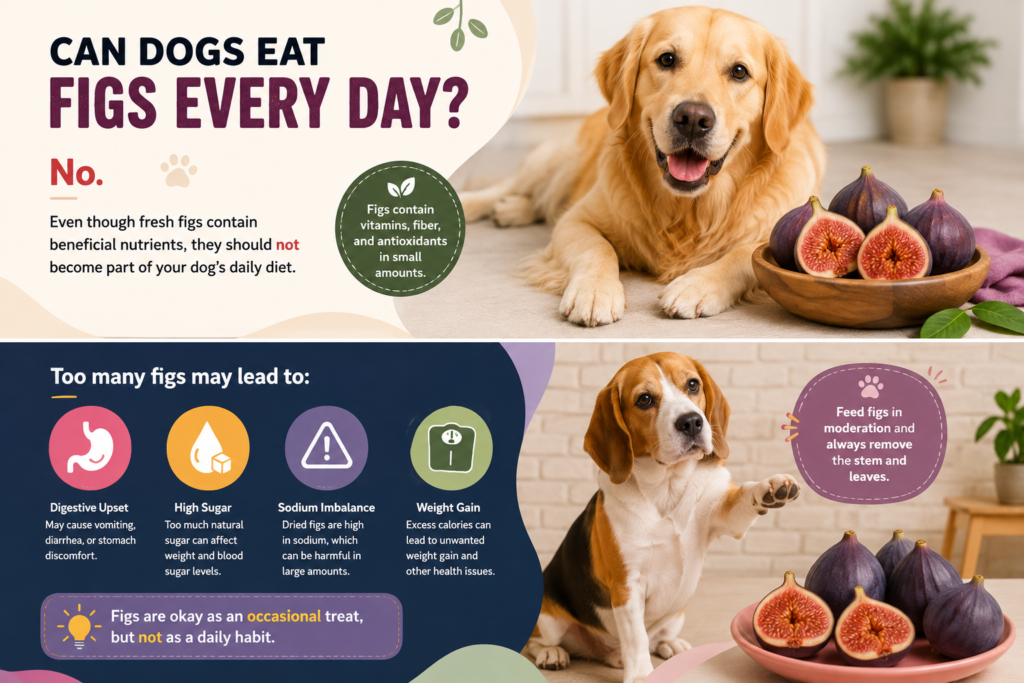
Too many figs may lead to:
- Diarrhea
- Stomach pain
- Gas
- Vomiting
- Weight gain
- High sugar intake
Instead, offer figs only occasionally as a special treat alongside a complete and balanced dog food.
Risks of Feeding Figs to Dogs
Although the answer to can dogs eat figs is yes, there are still several risks that every dog owner should understand before adding this fruit to their pet’s diet.
Fresh figs are only safe when served in moderation. If you’re wondering Can dogs eat figs?, remember that feeding too much or offering the wrong part of the fig plant can cause health problems ranging from mild stomach upset to more serious allergic reactions.
Let’s take a closer look at the most common risks.
1. Digestive Upset
The most common side effect of feeding figs is digestive discomfort.
Figs are naturally high in fiber. If you’re wondering Can dogs eat figs?, it’s important to remember that while small amounts of fiber can be beneficial, excessive fiber can overwhelm your dog’s digestive system and may cause digestive discomfort.
Eating too many figs may lead to:
- Diarrhea
- Loose stools
- Vomiting
- Gas
- Bloating
- Stomach pain
If your dog develops any of these symptoms after eating figs, stop feeding them immediately and provide plenty of fresh water.
2. High Natural Sugar Content
Many pet owners ask, are figs safe for dogs with diabetes?
The answer is generally no, or only under veterinary supervision.
Although figs contain natural sugar instead of added sugar, they still have a relatively high sugar content compared to many other fruits.
Too much sugar may contribute to:
- Weight gain
- Blood sugar spikes
- Obesity
- Dental problems
Dogs with diabetes, pancreatitis, or obesity should avoid figs unless your veterinarian specifically approves them.
3. Allergic Reactions
Another concern when asking can dogs eat figs is allergies.
Some dogs may develop an allergic reaction after eating figs for the first time.
Possible symptoms include:
- Excessive itching
- Skin redness
- Swelling around the mouth
- Hives
- Ear irritation
- Vomiting
- Diarrhea
Serious allergic reactions are rare but require immediate veterinary care if your dog has trouble breathing or develops severe facial swelling.
4. Choking Hazard
Whole figs can become a choking hazard, especially for:
- Small dogs
- Puppies
- Senior dogs
If you’re wondering Can dogs eat figs?, always wash the fruit thoroughly and cut it into small, bite-sized pieces before serving.
Never allow your dog to swallow a whole fig, as large pieces may be difficult to chew and digest.
Can Puppies Eat Figs?
Many new pet owners wonder, can puppies eat figs?
The answer is yes, but with extra caution.
Puppies have much more sensitive digestive systems than adult dogs.
Introducing too much fruit too quickly may cause:
- Diarrhea
- Vomiting
- Stomach cramps
- Gas
If you’re wondering Can dogs eat figs?, puppies can try a tiny piece of fresh fig, about the size of your fingernail.
Watch your puppy closely for the next 24 hours. If there are no signs of digestive upset or allergies, you can occasionally offer another small piece as a treat.
Remember that puppies need balanced puppy food for proper growth, so fruit should only make up a very small part of their diet. Can dogs eat figs? Yes, but only as an occasional treat in tiny amounts.
Can Dogs Eat Fresh Figs?
Yes.
Fresh, ripe figs are the safest type of fig for dogs.
When people search can dogs eat fresh figs, veterinarians generally agree that fresh figs are acceptable in moderation.
Before serving:
- Wash the fig thoroughly.
- Remove the stem.
- Cut it into small pieces.
- Feed only ripe fruit.
- Do not add sugar or seasonings.
Fresh figs contain more water than dried figs, making them easier to digest.
They are also lower in sugar than dried figs.
Can Dogs Eat Dried Figs?
Many owners also ask, can dogs eat dried figs?
The answer is it is best to avoid them.
Drying removes most of the water while concentrating the sugar.
As a result, dried figs contain significantly more sugar per bite than fresh figs.
Problems with dried figs include:
- Very high sugar content
- Sticky texture that can stick to teeth
- Greater calorie density
- Harder to digest
Occasionally eating one small piece may not harm a healthy dog, but if you’re wondering Can dogs eat figs?, dried figs should never become a regular treat.
Fresh figs are always the healthier option because they contain more water and generally have less concentrated sugar than dried figs.
Fresh Figs vs Dried Figs
| Feature | Fresh Figs | Dried Figs |
| Water Content | High | Very Low |
| Sugar | Moderate | Very High |
| Calories | Lower | Much Higher |
| Digestion | Easier | Harder |
| Best Choice | ✅ Yes | ⚠️ Occasionally or Avoid |
Can Dogs Eat Fig Newtons?
One of the most searched questions is:
Can dogs eat Fig Newtons?
The answer is No, they are not recommended.
Although Fig Newtons contain fig filling, they also contain many ingredients that are unhealthy for dogs.
These include:
- Added sugar
- Refined flour
- Artificial flavors
- Preservatives
- High calories
- Processed ingredients
Regularly feeding sugary cookies can contribute to:
- Obesity
- Diabetes
- Tooth decay
- Digestive upset
If your dog accidentally eats one Fig Newton, it usually isn’t an emergency.
However, eating an entire package could cause stomach problems, especially in small dogs.
Instead of processed snacks, choose fresh fruit in moderation.
Can Dogs Eat Homemade Fig Desserts?
Many homemade recipes include:
- Sugar
- Butter
- Honey
- Chocolate
- Nutmeg
- Cinnamon
- Artificial sweeteners
These ingredients make homemade fig desserts unsuitable for dogs.
Never feed your dog:
- Fig cake
- Fig pie
- Fig jam
- Fig cookies
- Fig muffins
Stick to plain fresh figs only.
Can Dogs Eat Fig Jam?
No.
Most fig jams contain large amounts of added sugar.
Some sugar-free jams contain xylitol, an artificial sweetener that is extremely toxic to dogs.
Even a small amount of xylitol can cause:
- Low blood sugar
- Seizures
- Liver failure
Always keep jams and preserves away from pets.
Can Dogs Eat Canned Figs?
Canned figs are also not recommended.
They often contain:
- Heavy syrup
- Added sugar
- Artificial preservatives
- Flavor enhancers
These ingredients provide no nutritional benefit for dogs.
Fresh fruit remains the safest choice.
How to Introduce Figs Safely
If your dog has never eaten figs before, introduce them slowly.
Follow these steps:
Step 1
Offer one very small piece.
Step 2
Wait 24 hours.
Step 3
Watch for symptoms like:
- Vomiting
- Diarrhea
- Itching
- Swelling
- Excessive scratching
Step 4
If your dog shows no reaction, you may occasionally feed small portions.
Signs Your Dog Ate Too Many Figs
Even healthy dogs can become sick after eating excessive amounts.
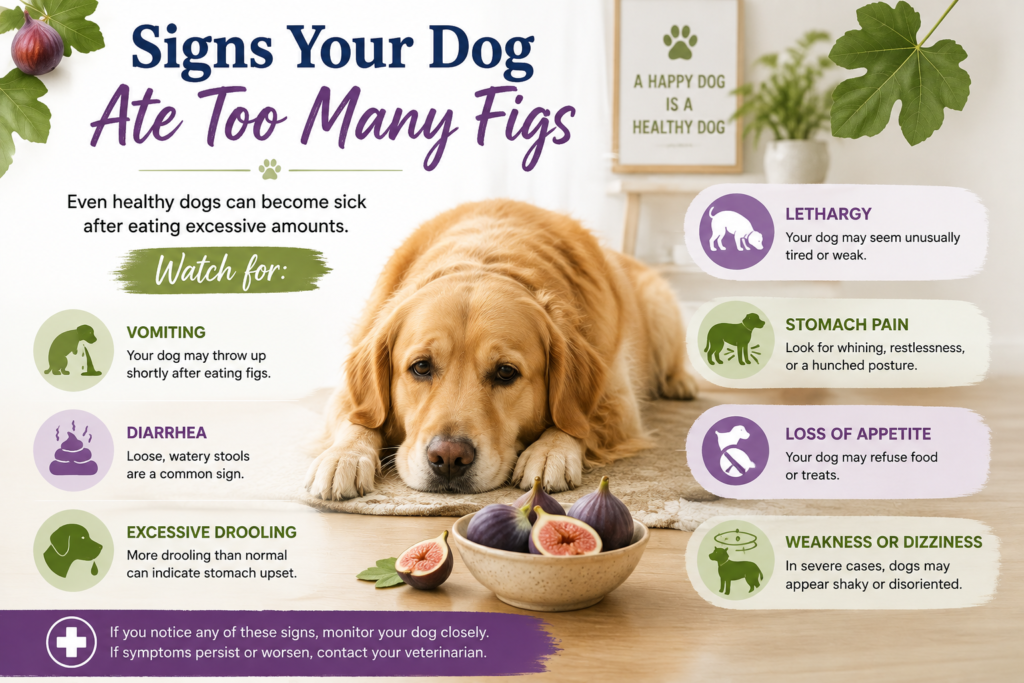
Watch for:
- Vomiting
- Diarrhea
- Excessive drooling
- Loss of appetite
- Gas
- Bloating
- Stomach pain
- Lethargy
Most mild cases improve within 24 hours.
However, persistent vomiting, repeated diarrhea, or severe lethargy should be evaluated by a veterinarian.
Can Dogs Eat Fig Leaves?
One of the biggest misconceptions about figs is that the entire plant is safe for dogs. While the fruit can be offered occasionally, fig leaves should never be fed to dogs.
The answer to can dogs eat fig leaves is no.
If you’re wondering Can dogs eat figs?, it’s important to remember that this applies to the fruit only, not the entire fig plant.
Fig leaves contain natural compounds, including ficin and psoralen, which can irritate your dog’s skin, mouth, and digestive system. These substances are found in the leaves, stems, and milky white sap of the fig tree.
Even chewing a small amount of a fig leaf may cause discomfort in some dogs.
Why Are Fig Leaves Dangerous?
Unlike the sweet fruit, fig leaves produce a sticky white sap. This sap acts as the plant’s natural defense mechanism but can be harmful to pets.
If a dog chews or swallows a fig leaf, it may experience:
- Mouth irritation
- Excessive drooling
- Vomiting
- Diarrhea
- Loss of appetite
- Skin redness
- Pawing at the mouth
Some dogs are more sensitive than others, so even a small exposure can lead to noticeable symptoms.
Are Fig Trees Poisonous to Dogs?
Many pet owners ask, are fig trees poisonous to dogs?
The answer is yes, parts of the fig tree are considered toxic.
The fruit itself is generally safe when ripe and fed in moderation, but the rest of the plant—including the leaves, stems, branches, and sap—can cause irritation and digestive problems.
If you grow a fig tree in your yard, keep your dog away from it or use a fence to prevent access.
Which Parts of the Fig Tree Are Toxic?
| Part of the Fig Tree | Safe for Dogs? |
| Ripe fresh fruit | ✅ Yes, in moderation |
| Dried fruit | ⚠️ Not recommended |
| Leaves | ❌ Toxic |
| Stems | ❌ Toxic |
| Branches | ❌ Toxic |
| Milky sap | ❌ Toxic |
| Unripe fruit | ⚠️ Best avoided |
Only the ripe fruit should ever be considered as an occasional treat.
Can Dogs Eat Fig Tree Fruit?
Another common question is can dogs eat fig tree fruit?
Yes, dogs can eat ripe fig tree fruit in small amounts.
However, make sure:
- The fruit is fully ripe.
- It is washed thoroughly.
- The stem is removed.
- It is cut into bite-sized pieces.
- Your dog has never shown an allergy to figs.
Never allow your dog to pick fruit directly from the tree because it may come into contact with toxic sap.
Fig Sap Toxicity in Dogs
If you’re wondering Can dogs eat figs?, it’s important to know that the fruit is different from the white sap produced by the fig tree.
The white milky sap produced by fig trees contains compounds that can irritate both the skin and digestive tract.
If the sap comes into contact with your dog’s skin, you may notice:
- Redness
- Itching
- Swelling
- Rash
If swallowed, symptoms may include:
- Vomiting
- Diarrhea
- Excessive drooling
- Mouth pain
- Loss of appetite
Wash the affected area with clean water and contact your veterinarian if symptoms persist or worsen.
How Much Fig Can a Dog Eat?
Although can dogs eat figs has a positive answer, portion control is extremely important.
Figs should only be given as an occasional treat and should never replace a balanced dog food.
A good rule is that treats—including fruit—should make up no more than 10% of your dog’s daily calorie intake.
Recommended Serving Size by Dog Weight
| Dog Size | Serving Size |
| Extra Small (under 10 lbs / 4.5 kg) | ¼ small fig |
| Small (10–20 lbs / 4.5–9 kg) | ½ small fig |
| Medium (20–50 lbs / 9–23 kg) | 1 small fig |
| Large (50–90 lbs / 23–41 kg) | 1–2 small figs |
| Giant (90+ lbs / 41+ kg) | Up to 2 small figs occasionally |
These are general guidelines. If your dog has diabetes, obesity, pancreatitis, or digestive problems, consult your veterinarian before feeding figs.
How Often Can Dogs Eat Figs?
Fresh figs should be considered an occasional treat rather than a regular part of your dog’s diet.
A healthy adult dog can usually enjoy a small serving:
- Once a week
- Or once every two weeks
Feeding figs too frequently increases the risk of digestive upset and excessive sugar intake.
What Happens If My Dog Eats Too Many Figs?
Accidentally eating several figs is usually not life-threatening, but it can upset your dog’s stomach.
Common symptoms include:
- Vomiting
- Diarrhea
- Gas
- Bloating
- Stomach cramps
- Loss of appetite
- Lethargy
In most healthy dogs, these symptoms are mild and improve within 24 hours.
If you’re wondering Can dogs eat figs?, it’s important to monitor your dog carefully after offering this fruit, especially if they have any health concerns.
If symptoms become severe or your dog is very young, elderly, or has an underlying health condition, contact your veterinarian promptly.
What Should I Do If My Dog Ate a Fig Leaf?
If your dog has eaten a fig leaf, don’t panic, but act quickly.
Step 1: Remove Any Remaining Plant Material
Carefully take any remaining leaf or stem out of your dog’s mouth if it is safe to do so.
Step 2: Rinse the Mouth
Offer clean water or gently rinse your dog’s mouth to remove any remaining sap.
Step 3: Observe Your Dog
Monitor for signs such as:
- Drooling
- Vomiting
- Diarrhea
- Pawing at the mouth
- Swelling
- Difficulty eating
Step 4: Contact Your Veterinarian
If your dog has eaten a large amount of the leaf or develops persistent symptoms, contact your veterinarian immediately.
Emergency Warning Signs
Seek veterinary care as soon as possible if your dog experiences:
- Repeated vomiting
- Severe diarrhea
- Difficulty breathing
- Facial swelling
- Collapse
- Extreme lethargy
- Bloody stool
- Seizures
Although serious reactions are uncommon, prompt treatment is always safest.
How to Prevent Fig Poisoning
The easiest way to protect your dog is to prevent access to the fig plant.
Here are some practical tips:
- Fence off fig trees in your yard.
- Pick ripe fruit before it falls.
- Dispose of leaves and branches properly.
- Keep indoor ornamental fig plants out of reach.
- Supervise dogs during walks if fig trees are nearby.
Prevention is always easier than treatment.
Final Thoughts
If you’ve been wondering, can dogs eat figs, the answer is yes—but only in moderation. Fresh, ripe figs can be a healthy occasional treat because they provide fiber, vitamins, minerals, and antioxidants that may support your dog’s overall health. However, they should never replace a complete and balanced dog food.
It’s equally important to remember that fig leaves, stems, and the milky sap of the fig tree are toxic to dogs and should always be kept out of reach. Feeding only small pieces of fresh fig and introducing the fruit gradually can help reduce the risk of digestive upset or allergic reactions.
Every dog is different. Some dogs tolerate figs well, while others may develop stomach discomfort after eating even a small amount. Whenever you introduce a new food, monitor your dog closely and contact your veterinarian if you notice vomiting, diarrhea, excessive drooling, or other unusual symptoms.
In the end, can dogs eat figs? Yes, healthy dogs can enjoy fresh figs as an occasional treat when served properly. By following the correct serving guidelines and avoiding the toxic parts of the fig plant, you can safely share this sweet fruit with your furry companion while keeping their health and happiness a top priority.