
Turkey is a popular food in many households, especially during holidays, family gatherings, and special dinners. Because dogs often become excited when they smell turkey cooking, many owners wonder whether sharing turkey with their pets is safe. One of the most important questions dog owners ask is: can dogs eat turkey bones?
The short answer is no, dogs should not eat turkey bones. Turkey bones can create several health risks, including choking, splintering, mouth injuries, dental damage, digestive irritation, intestinal blockage, and potentially serious internal injuries. Cooked turkey bones can be especially dangerous because cooking can make bones brittle and more likely to break into sharp pieces.
It is important to understand the difference between plain turkey meat and turkey bones. Plain, fully cooked, boneless turkey can be an occasional treat for many dogs when served without harmful seasonings. Turkey bones, however, do not provide a necessary nutritional benefit that justifies the potential risks.
If you have ever wondered can dogs eat turkey bones, this detailed guide will explain exactly why turkey bones should be avoided, whether raw turkey bones are different from cooked bones, what happens when a dog swallows a turkey bone, what symptoms you should watch for, what to do after accidental ingestion, and how to safely give your dog turkey.
Can Dogs Eat Turkey Bones?
The safest answer to can dogs eat turkey bones is no.
Dogs may have strong jaws and a natural desire to chew, but that does not mean turkey bones are safe for them. A turkey bone can crack when a dog bites it and may produce sharp fragments. These fragments can potentially injure the mouth, throat, stomach, or intestines.
Another concern is that dogs sometimes swallow food much faster than people expect. A dog may chew a bone only a few times before swallowing it. A large piece may become lodged in the throat or digestive tract.
When asking can dogs eat turkey bones, it is also important to consider whether the bone was cooked. Cooked bones can become brittle and may splinter more easily.
Even if your dog has eaten a bone before without developing an obvious problem, that does not prove that bones are safe. Different bones have different shapes, sizes, and densities, and individual dogs chew and swallow differently.
For these reasons, can dogs eat turkey bones should not be interpreted as permission to give leftover turkey bones as treats. There are safer ways for your dog to enjoy the taste of turkey.
Why Can Dogs Not Eat Turkey Bones?
The main reason can dogs eat turkey bones has a negative answer is that bones can cause physical injuries.
Turkey bones can:
- Break into sharp fragments
- Become lodged in the mouth
- Become stuck in the throat
- Cause choking
- Damage teeth
- Irritate the esophagus
- Irritate the stomach
- Injure the intestines
- Contribute to constipation
- Cause an intestinal obstruction
- Potentially cause internal injury
The risk is not limited to large bones. Smaller fragments can also create problems.
When people ask can dogs eat turkey bones, they sometimes assume that a dog’s digestive system can dissolve every bone. That is not a safe assumption. Some bone material may be digested, but sharp or large fragments can still cause mechanical problems.
There is also no nutritional requirement for dogs to consume leftover turkey bones. A balanced dog food already provides the nutrients a dog needs.
Therefore, can dogs eat turkey bones is best answered from a prevention perspective: there is no good reason to intentionally give them to your dog.
Can Dogs Eat Cooked Turkey Bones?
Can dogs eat turkey bones after they have been cooked? No.
Cooked turkey bones deserve particular caution. Heat can alter the structure of bone and make it more brittle. A brittle bone may fracture when a dog bites down on it.
This is especially common after family meals. Someone may throw a turkey leg or wing into the trash, and the dog may later find the bone.
If you are wondering can dogs eat turkey bones left over from a roasted turkey, baked turkey, grilled turkey, or another cooked turkey meal, the answer is no.
Do not give your dog:
- Cooked turkey legs
- Cooked turkey wings
- Cooked turkey neck bones
- Cooked turkey ribs
- Cooked turkey carcass pieces
- Cooked turkey bone fragments
Even if a cooked bone looks clean, it can still be brittle.
The question can dogs eat turkey bones is especially important during holiday meals because cooked turkey bones are often easily accessible.
Can Dogs Eat Raw Turkey Bones?
Many dog owners also ask can dogs eat turkey bones when they are raw?
Raw bones are not automatically safe.
Some raw-feeding programs include certain bones, but feeding raw bones requires careful consideration of the individual dog’s size, chewing habits, dental health, diet, and overall health. Raw poultry can also carry bacteria, creating food-safety concerns.
Therefore, can dogs eat turkey bones should not automatically become yes simply because the bone is raw.
If your veterinarian has specifically recommended a properly formulated raw diet, follow professional guidance about the exact foods and preparation methods. Do not assume that a leftover raw turkey bone from your kitchen is suitable.
For most pet owners, the easier option is to remove all bones and provide plain turkey meat instead.
Can Dogs Eat Turkey Leg Bones?
Can dogs eat turkey bones from turkey legs? No.
Turkey leg bones can be large and hard. A dog with strong jaws may crush the bone into several fragments. Another dog may swallow a large section without chewing enough.
Either situation can create a potential hazard.
Turkey leg bones should therefore never be used as a casual dog treat.
If you are preparing turkey for your pet, remove the meat from the bone before serving it. Inspect the meat carefully to make sure no small bone fragments remain.
When considering can dogs eat turkey bones, turkey leg bones should always be placed in the unsafe category.
Can Dogs Eat Turkey Wing Bones?
Can dogs eat turkey bones from turkey wings? No.
Turkey wing bones can also break into fragments when chewed. Because wing bones are smaller than some leg bones, owners sometimes assume that they are harmless.
That assumption is incorrect.
A small bone fragment can still become lodged in the throat or digestive tract. A dog may also swallow several fragments quickly.
If you are sharing turkey with your dog, remove wing bones completely.
The answer to can dogs eat turkey bones does not change simply because the bone comes from a wing instead of a leg.
Can Dogs Eat Turkey Neck Bones?
Another question is can dogs eat turkey bones from the neck?
Turkey neck bones can be used in some raw-feeding approaches, but they are not completely risk-free.
Potential concerns include:
- Choking
- Swallowing large pieces
- Dental damage
- Constipation
- Digestive obstruction
- Bacterial contamination
If you are considering feeding turkey necks as part of a raw diet, discuss the plan with your veterinarian or a qualified veterinary nutrition professional.
For an occasional turkey treat, there is no need to give your dog a turkey neck bone.
So, can dogs eat turkey bones from turkey necks? They should not be casually given to dogs without appropriate professional guidance.
Can Dogs Eat Turkey Bones From Leftovers?
Holiday leftovers are one of the most common ways dogs accidentally consume bones.
After a meal, a dog may find a turkey bone on a plate, in a trash can, or on the kitchen floor.
If you are asking can dogs eat turkey bones from leftovers, the answer remains no.
Leftover turkey bones may be cooked, brittle, seasoned, or covered with fat and sauces. These factors can make them particularly unsuitable for dogs.
Keep leftovers out of your dog’s reach and dispose of bones in a secure trash container.
What Happens If a Dog Eats Turkey Bones?
The answer to can dogs eat turkey bones becomes especially important if your dog has already swallowed one.
The outcome can vary from one dog to another.
Some dogs may show no immediate symptoms. Others may develop problems soon after swallowing the bone.
Possible complications include:
- Choking
- Gagging
- Coughing
- Excessive drooling
- Difficulty swallowing
- Vomiting
- Abdominal pain
- Loss of appetite
- Constipation
- Straining to defecate
- Blood in stool
- Lethargy
- Gastrointestinal obstruction
- Internal injury
The risk depends on several factors, including the dog’s size, the size and shape of the bone, whether it was cooked, how much was swallowed, and whether the bone was chewed.
This is why can dogs eat turkey bones is not a question that should be answered based on whether your particular dog seems capable of chewing them.
Can Dogs Eat Turkey Bones Without Problems?
Some dogs may swallow a bone and appear completely normal.
However, that does not mean can dogs eat turkey bones should be answered yes.
A bone can potentially pass through the digestive tract without complications, but another bone may become lodged or cause irritation. There is no reliable way to know in advance exactly what will happen.
Some complications may also develop later rather than immediately.
If your dog has swallowed a turkey bone, contact your veterinarian for advice and monitor the dog carefully.
Symptoms After a Dog Eats Turkey Bones
If you are asking can dogs eat turkey bones because your dog has already swallowed one, knowing the warning signs is important.
Watch for the following symptoms.
Gagging
Repeated gagging may suggest that a bone fragment is irritating the throat or has become lodged.
Coughing
Coughing after swallowing a bone can indicate irritation or a possible airway issue.
Excessive Drooling
A dog with mouth or throat discomfort may drool more than normal.
Difficulty Swallowing
Repeated swallowing, neck stretching, or refusing food can indicate discomfort.
Vomiting
Repeated vomiting may indicate digestive irritation or obstruction.
Abdominal Pain
A dog with abdominal pain may become restless, hide, whine, or resist being touched.
Loss of Appetite
A dog experiencing digestive discomfort may suddenly refuse food.
Constipation
Bone fragments can sometimes contribute to hard stools or difficulty passing stool.
Blood in Stool
Blood in the stool can be a sign of gastrointestinal irritation or injury.
Lethargy
Unusual tiredness or weakness can indicate that the dog is becoming unwell.
Difficulty Breathing
Breathing problems can indicate choking or another emergency.
If any severe symptoms occur, seek veterinary care immediately.
What Should You Do If Your Dog Eats Turkey Bones?
If your dog accidentally eats turkey bones, stay calm.
First, remove all remaining bones from the dog’s reach.
Then contact your veterinarian and explain the situation.
Tell the veterinarian:
- Your dog’s age
- Your dog’s approximate weight
- Whether the bone was cooked or raw
- Which part of the turkey it came from
- Approximate size of the bone
- How much was swallowed
- Whether the dog chewed the bone
- When the dog swallowed it
- Whether symptoms are present
This information can help the veterinarian determine what to do next.
If you are wondering can dogs eat turkey bones because an accidental ingestion has already happened, professional advice is more useful than trying to diagnose the situation at home.
Should You Make a Dog Vomit After Eating Turkey Bones?
No, do not induce vomiting unless your veterinarian specifically tells you to do so.
This is an important point when considering can dogs eat turkey bones.
A sharp bone fragment could potentially cause additional injury while traveling back through the esophagus.
Do not use home remedies to force your dog to vomit.
Instead, contact your veterinarian and follow the instructions you receive.
When Is Eating Turkey Bones an Emergency?
If your dog has swallowed a turkey bone and develops serious symptoms, seek emergency veterinary care.
Emergency signs can include:
- Difficulty breathing
- Severe choking
- Collapse
- Extreme weakness
- Repeated vomiting
- Severe abdominal pain
- Significant blood in stool
- Blood in vomit
- Severe difficulty swallowing
- A swollen abdomen
- Severe distress
If you are asking can dogs eat turkey bones after an accidental ingestion and your dog is showing serious symptoms, do not wait for the symptoms to disappear on their own.
Prompt veterinary assessment is the safest approach.
Can Turkey Bones Cause Choking?
Yes, turkey bones can cause choking.
A dog may swallow a piece that is too large to move safely through the throat. The fragment may become lodged and interfere with breathing.
Choking can become life-threatening quickly.
This is one of the clearest reasons why can dogs eat turkey bones should have a no answer.
Even if your dog normally chews food carefully, you cannot guarantee that it will chew a turkey bone safely.
Can Turkey Bones Cause an Intestinal Blockage?
Turkey bones can potentially cause gastrointestinal obstruction.
A fragment may become lodged in the stomach or intestines and prevent food and fluids from moving normally.
Possible signs include:
- Repeated vomiting
- Refusing food
- Abdominal discomfort
- Constipation
- Straining
- Lethargy
- Abdominal swelling
A suspected obstruction requires veterinary attention.
When considering can dogs eat turkey bones, the possibility of obstruction is one of the most important risks to understand.
Can Turkey Bones Splinter?
Yes.
Splintering is a major concern with turkey bones, especially cooked bones.
When a dog chews a cooked turkey bone, it may crack into sharp pieces.
These fragments may potentially damage the mouth, throat, stomach, or intestines.
Therefore, can dogs eat turkey bones should never be answered by saying that a dog will simply chew the bone into harmless pieces.
Chewing can actually create smaller, sharper fragments.
Can Turkey Bones Damage Teeth?
Hard bones can damage teeth.
A dog may fracture a tooth while aggressively chewing a hard object.
Dental fractures can be painful and may require veterinary treatment.
If your dog develops excessive drooling, difficulty eating, pawing at the mouth, or unusual chewing behavior after chewing a bone, contact your veterinarian.
This is another reason why can dogs eat turkey bones is not worth testing.
Can Turkey Bones Cause Constipation?
Bone consumption can sometimes contribute to hard or difficult stools.
A dog may strain repeatedly or have difficulty passing stool.
If your dog develops constipation after swallowing a bone, contact your veterinarian.
Do not assume that a home remedy is appropriate because a bone may be involved.
The possibility of constipation is another reason can dogs eat turkey bones should be answered cautiously.
Can Turkey Bones Cause Internal Injuries?
Sharp bone fragments can potentially injure the digestive tract.
The mouth, throat, stomach, and intestines may all be exposed to fragments after a dog swallows a bone.
Serious internal injuries are not guaranteed, but they can be dangerous if they occur.
This is why preventing access to turkey bones is safer than intentionally feeding them.
If you are asking can dogs eat turkey bones because your dog has swallowed one, contact a veterinarian rather than relying on assumptions about digestion.
Are Turkey Bones Worse Than Turkey Meat?
Yes.
Turkey meat and turkey bones should be treated very differently.
Plain turkey meat can provide protein and may be used as an occasional treat for many dogs.
Turkey bones provide unnecessary physical risks.
If you want your dog to enjoy turkey, remove all bones before serving it.
The distinction between can dogs eat turkey bones and whether dogs can eat turkey meat is extremely important.
The answer may be yes for plain boneless turkey in moderation, but no for turkey bones.
Can Dogs Eat Boneless Turkey?
Yes, many healthy dogs can eat a small amount of plain, fully cooked, boneless turkey.
The turkey should not contain:
- Bones
- Onion
- Garlic
- Excessive salt
- Heavy seasoning
- Rich sauces
- Large amounts of fat
Cut the meat into appropriately sized pieces.
This is a much safer option than giving your dog a turkey bone.
So, when someone asks can dogs eat turkey bones, explain that boneless turkey meat is the safer alternative.
Is Turkey Healthy for Dogs?
Plain turkey can be a good source of protein and can make an enjoyable occasional treat.
However, turkey should not automatically replace your dog’s regular food.
Dogs need a complete and balanced diet containing appropriate levels of protein, fat, vitamins, minerals, and other nutrients.
Therefore, even if you decide to give your dog turkey, keep portions moderate.
The nutritional benefits of turkey meat do not make can dogs eat turkey bones a yes.
Can Dogs Eat Turkey Skin?
Turkey skin is best limited or avoided.
It can contain a high amount of fat, especially when prepared with butter, oil, or other rich ingredients.
Large amounts of fatty food can cause digestive upset and may increase pancreatitis risk in susceptible dogs.
If you want your dog to enjoy turkey, plain meat without skin is generally the better choice.
This also means that can dogs eat turkey bones should not be confused with whether every part of a turkey is safe.
Can Dogs Eat Turkey Gravy?
Turkey gravy is generally not recommended for dogs.
Gravy may contain:
- Fat
- Salt
- Onion
- Garlic
- Butter
- Spices
- Other rich ingredients
Some of these ingredients may be harmful or unsuitable for dogs.
If you want to give your dog turkey, skip the gravy.
Plain boneless meat is a better option.
The fact that turkey meat may be suitable does not change the answer to can dogs eat turkey bones.
Can Dogs Eat Seasoned Turkey?
Heavily seasoned turkey should generally be avoided.
Human recipes often contain ingredients that dogs do not need and may not tolerate well.
Common ingredients include:
- Onion
- Garlic
- Excessive salt
- Butter
- Spicy seasonings
- Rich sauces
If you are preparing turkey for your dog, set aside a plain portion before seasoning the rest.
This allows your dog to enjoy turkey without unnecessary ingredients.
And again, can dogs eat turkey bones remains no regardless of how the meat is seasoned.
Can Dogs Eat Leftover Turkey?
Dogs can eat small amounts of leftover turkey when the meat is plain, fully cooked, boneless, and free from harmful ingredients.
However, leftovers often contain sauces, gravy, skin, and seasoning.
Before giving leftovers to your dog, inspect them carefully.
Remove every bone and avoid foods containing onion or garlic.
The difference between can dogs eat turkey bones and can dogs eat turkey meat is important. The meat may be suitable in moderation, while the bones should be avoided.
How Much Turkey Can a Dog Eat?
The appropriate amount depends on the individual dog.
Important factors include:
- Weight
- Age
- Activity level
- Daily calorie requirements
- Current diet
- Health conditions
Treats and table foods should remain a limited part of a dog’s overall diet.
If your dog is overweight, ask your veterinarian about suitable portions.
Do not use turkey bones as a source of calcium or minerals.
The nutritional needs of a dog should be met through an appropriate complete and balanced diet rather than relying on the idea that can dogs eat turkey bones.
Can Puppies Eat Turkey Bones?
No, puppies should not be given turkey bones.
Puppies are curious and often chew objects they find around them. They may also swallow food quickly.
Because puppies are smaller and still developing, choking and obstruction can be especially concerning.
If you want to give a puppy turkey, provide a small amount of plain, fully cooked, boneless meat.
The answer to can dogs eat turkey bones is no for puppies just as it is for adult dogs.
Can Senior Dogs Eat Turkey Bones?
Senior dogs should also avoid turkey bones.
Older dogs may have dental problems, weakened teeth, or other health concerns that make hard bones unsuitable.
Senior dogs can also have digestive conditions that require special diets.
If you want to give a senior dog turkey, choose soft, plain, boneless meat in moderation.
Age does not make can dogs eat turkey bones a safer proposition.
Can Small Dogs Eat Turkey Bones?
Small dogs should not eat turkey bones.
Some owners believe that a small dog can safely eat a small bone.
However, even a small bone fragment can potentially become lodged in a small dog’s throat or digestive tract.
Small dogs can also have difficulty handling larger pieces.
Therefore, can dogs eat turkey bones has the same answer for small breeds: no.
Can Large Dogs Eat Turkey Bones?
Large dogs should not be given turkey bones either.
A large dog’s stronger jaws may crush the bone more easily, but that can create multiple sharp fragments.
Large dogs can still choke, fracture teeth, develop digestive obstruction, or suffer gastrointestinal injury.
Size does not eliminate the risks.
So, can dogs eat turkey bones is not a question that should be answered differently for large breeds.
Why Do Dogs Like Turkey Bones?
Dogs are naturally attracted to strong food smells.
Turkey bones can contain traces of meat, fat, juices, and other aromas that make them extremely appealing.
Your dog does not understand that the bone may be dangerous.
That is why owners should prevent access rather than expect the dog to make a safe choice.
If you are wondering can dogs eat turkey bones because your dog constantly tries to grab them, remember that attraction does not equal safety.
How to Prevent Your Dog From Eating Turkey Bones
Prevention is the best approach.
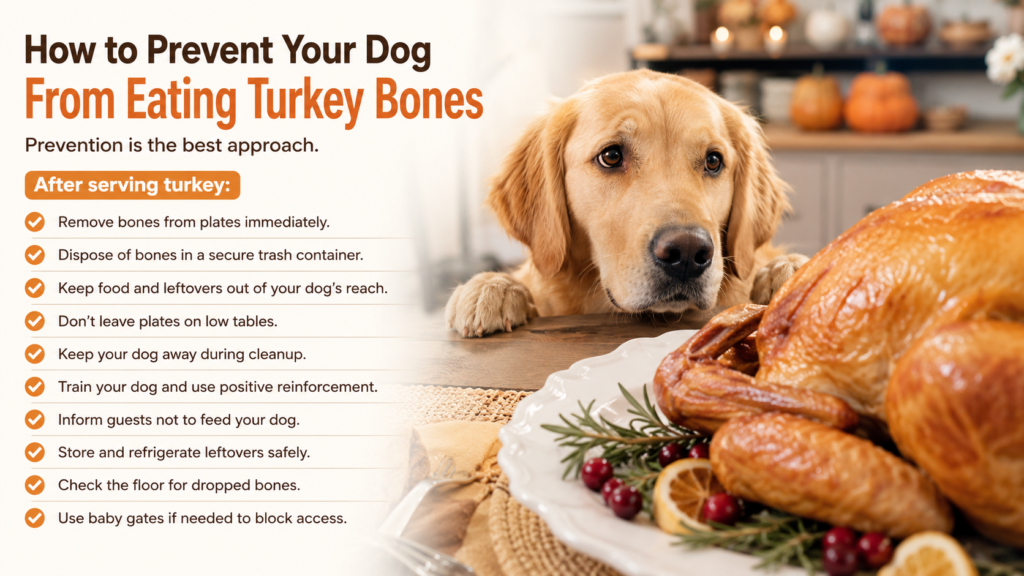
After serving turkey:
- Remove bones from plates immediately.
- Put discarded bones into a secure trash container.
- Keep trash away from your dog.
- Do not leave plates on low tables.
- Keep children from giving bones to the dog.
- Tell guests not to feed turkey bones to your pet.
- Keep your dog away from the kitchen during cleanup.
- Check the floor for dropped bones.
- Store turkey safely.
- Never intentionally use turkey bones as treats.
These simple precautions can significantly reduce accidental ingestion.
If your dog has a habit of stealing food, prevention becomes even more important.
The best answer to can dogs eat turkey bones is to keep them completely out of reach.
Can Dogs Eat Turkey Bones During Thanksgiving?
Thanksgiving meals can create additional risks for dogs.
Large family meals often involve turkey bones, skin, gravy, stuffing, sauces, and desserts.
Dogs may also have more opportunities to steal food because many people are moving around the house.
If you are hosting Thanksgiving, keep your dog away from food preparation and cleanup areas.
Ask guests not to feed your dog from their plates.
The holiday can be enjoyable for your pet without giving them turkey bones.
When guests ask can dogs eat turkey bones, make sure everyone understands that the safest answer is no.
Can Dogs Eat Turkey Bones During Christmas?
Christmas meals can create the same problem.
After dinner, do not leave turkey bones where your dog can reach them.
Place bones directly into a secure trash container.
Family members should know that even though the dog may appear excited and hungry, turkey bones are not an appropriate treat.
The safest answer to can dogs eat turkey bones remains no during Christmas and every other time of year.
What Are Safer Alternatives to Turkey Bones?
If your dog enjoys the taste of turkey, there are safer alternatives.
Consider:
- Plain cooked turkey breast
- Boneless turkey meat
- Small pieces of unseasoned turkey
- Veterinarian-approved treats
- Appropriate commercial dog chews
- Complete and balanced dog food
If your dog loves chewing, ask your veterinarian about an appropriate chew based on your dog’s size, age, dental health, and chewing behavior.
You do not need to give turkey bones simply because your dog enjoys chewing.
The question can dogs eat turkey bones is easy to avoid when safer alternatives are available.
Can Turkey Bones Damage a Dog’s Mouth?
Yes, sharp fragments can potentially injure the mouth.
A splintered piece may cut the gums, tongue, cheeks, or roof of the mouth.
A dog may show signs such as:
- Drooling
- Pawing at the mouth
- Difficulty eating
- Whining
- Blood around the mouth
- Refusing hard food
If your dog develops these symptoms after chewing a bone, contact your veterinarian.
This is another reason can dogs eat turkey bones should not be treated as a harmless food question.
Can Turkey Bones Cause Vomiting?
Yes, swallowed bones can potentially cause vomiting.
Vomiting may occur because the digestive tract is irritated or because a fragment is causing an obstruction.
Repeated vomiting is especially concerning.
If your dog has eaten a turkey bone and repeatedly vomits, contact your veterinarian.
The presence of vomiting does not mean that the dog should be made to vomit again.
When considering can dogs eat turkey bones, remember that attempting to remove a bone at home can create additional risks.
Can Turkey Bones Cause Bloody Stool?
A swallowed bone can potentially irritate the digestive tract, and blood in the stool should be taken seriously.
If you see blood after your dog has eaten a turkey bone, contact your veterinarian.
Do not assume that the blood is simply from normal digestion.
The question can dogs eat turkey bones becomes particularly urgent when symptoms such as bloody stool appear.
What If My Dog Ate a Small Turkey Bone?
If your dog ate a small turkey bone, do not automatically assume that there is no danger.
A small fragment may pass normally, but it may also become lodged or cause irritation.
Contact your veterinarian and provide details about the size and type of bone.
Monitor your dog for:
- Vomiting
- Abdominal pain
- Loss of appetite
- Constipation
- Straining
- Lethargy
- Difficulty swallowing
- Blood in stool
If symptoms appear, seek veterinary care.
The safest response to can dogs eat turkey bones is still to prevent ingestion whenever possible.
What If My Dog Swallowed a Whole Turkey Bone?
Swallowing a whole bone can be more concerning because a large piece may have difficulty passing through the digestive system.
Contact your veterinarian as soon as possible.
Tell them what type of bone was swallowed, how large it was, and approximately when it happened.
Do not induce vomiting unless instructed by a veterinary professional.
If your dog develops severe symptoms, seek emergency veterinary care.
The fact that a dog swallowed a bone without chewing it is another reason why can dogs eat turkey bones should not be answered yes.
What If My Dog Ate Turkey Bones and Seems Fine?
A dog that seems completely normal immediately after eating a turkey bone is reassuring, but it does not guarantee that no problem will develop.
Some complications may take time to become noticeable.
Continue monitoring your dog and follow any advice given by your veterinarian.
Pay attention to appetite, vomiting, bowel movements, energy, swallowing, and behavior.
If anything seems unusual, contact your veterinarian.
The question can dogs eat turkey bones should always be considered from a safety perspective rather than based only on how the dog looks immediately afterward.
Should Turkey Bones Ever Be Given as a Treat?
For ordinary pet owners, turkey bones should not be used as treats.
There are safer chew products and food treats available.
Dogs do not need turkey bones to obtain essential nutrients.
A small amount of plain boneless turkey can provide the flavor without the physical risks associated with bones.
So, can dogs eat turkey bones as an occasional treat? The safest answer is no.
Turkey Bones vs. Boneless Turkey
It is helpful to compare the two.
| Turkey Food | Recommendation |
| Plain cooked boneless turkey | Generally suitable in moderation |
| Cooked turkey bones | Avoid |
| Turkey leg bones | Avoid |
| Turkey wing bones | Avoid |
| Turkey neck bones | Not risk-free; professional guidance recommended |
| Turkey skin | Best limited or avoided |
| Turkey gravy | Generally avoid |
| Heavily seasoned turkey | Avoid |
| Turkey containing onion or garlic | Avoid |
The key difference is that plain boneless turkey can be offered in moderation, while bones create physical hazards.
This distinction makes the answer to can dogs eat turkey bones much easier to understand.
Common Myths About Can Dogs Eat Turkey Bones
Myth 1: Dogs Naturally Eat Bones
Dogs may naturally chew bones, but natural behavior does not mean every bone is safe.
Myth 2: Large Dogs Can Eat Any Bone
Large dogs can still choke, damage their teeth, or develop gastrointestinal complications.
Myth 3: Raw Bones Are Always Safe
Raw bones can still cause choking, dental injuries, obstruction, and bacterial concerns.
Myth 4: Cooked Bones Are Fine If They Look Soft
Cooked bones can become brittle even when they appear harmless.
Myth 5: Small Bones Cannot Hurt Dogs
A small fragment can still become lodged or cause irritation.
Myth 6: Dogs Can Digest Every Bone
Digestive systems do not guarantee that every bone fragment will pass safely.
Myth 7: If a Dog Looks Fine, Nothing Can Happen
Some complications can develop later.
These myths are important to understand whenever someone searches can dogs eat turkey bones.
Frequently Asked Questions About Can Dogs Eat Turkey Bones
Can dogs eat turkey bones?
No. Turkey bones can splinter, cause choking, damage teeth, and potentially cause gastrointestinal problems.
Can dogs eat cooked turkey bones?
No. Cooked turkey bones can become brittle and break into sharp pieces.
Can dogs eat raw turkey bones?
Raw turkey bones are not automatically safe and can still cause choking, dental injury, obstruction, and bacterial concerns.
Can dogs eat turkey leg bones?
No. Turkey leg bones are hard and can break into dangerous fragments.
Can dogs eat turkey wing bones?
No. Turkey wing bones can splinter and should not be given to dogs.
Can dogs eat turkey neck bones?
Turkey neck bones can present risks and should not be casually given. If considering a raw diet, speak with a veterinary professional.
Can dogs eat turkey bones from Thanksgiving?
No. Thanksgiving turkey bones should be kept away from dogs and disposed of securely.
Can dogs eat turkey bones from Christmas dinner?
No. Christmas turkey bones can create the same choking, splintering, and digestive risks.
What should I do if my dog ate a turkey bone?
Contact your veterinarian and provide details about the bone, your dog’s size, and when it was swallowed. Monitor for symptoms and follow professional advice.
Should I make my dog vomit after eating a turkey bone?
No. Do not induce vomiting unless a veterinarian specifically instructs you to.
Can turkey bones kill a dog?
Serious complications such as choking, obstruction, or internal injury can potentially become life-threatening. This is why dogs should not intentionally be fed turkey bones.
How long after eating a turkey bone can symptoms appear?
Symptoms can vary. Some may occur quickly, while other complications can take longer to become obvious. Monitor your dog and follow veterinary advice.
Is plain turkey safe for dogs?
Plain, fully cooked, boneless turkey can be an occasional treat for many dogs when served in moderation.
Can dogs eat turkey skin?
Turkey skin can be high in fat and is best limited or avoided.
Can dogs eat turkey gravy?
Turkey gravy is generally unsuitable because it can contain high amounts of fat, salt, onion, garlic, and other ingredients.
Can puppies eat turkey bones?
No. Puppies should not be given turkey bones.
Can senior dogs eat turkey bones?
No. Senior dogs can also suffer dental, choking, and digestive complications.
Can small dogs eat turkey bones?
No. Small dogs can be particularly vulnerable to choking and obstruction.
Can large dogs eat turkey bones?
No. Large dogs can still suffer from splintering, choking, dental injuries, and gastrointestinal obstruction.
Can dogs eat turkey bones if they are very soft?
No. Softness should not be used as a guarantee of safety.
Can dogs eat turkey bones if they chew them carefully?
No. Even careful chewing can produce fragments that may cause problems.
Can dogs eat turkey bones with meat still attached?
No. The presence of meat does not make the bone safe.
Can dogs eat turkey bones after boiling?
Cooked turkey bones should still be avoided because cooking can change their structure and make them brittle.
Final Verdict: Can Dogs Eat Turkey Bones?
So, can dogs eat turkey bones? The safest answer is no.
Turkey bones can create unnecessary risks, including choking, splintering, dental injuries, digestive irritation, constipation, intestinal obstruction, and potentially serious internal injuries.
Cooked turkey bones deserve particular caution because cooking can make them brittle and more likely to break into sharp fragments.
Raw turkey bones are not automatically safe either. Although some specialized raw-feeding plans include bones, those diets should be designed carefully and discussed with a veterinary professional.
If you want your dog to enjoy turkey, remove every bone and provide a small portion of plain, fully cooked, boneless turkey meat. Avoid skin, gravy, onion, garlic, excessive salt, and rich seasonings.
If your dog accidentally eats turkey bones, do not panic and do not induce vomiting unless a veterinarian specifically tells you to. Contact your veterinarian, explain exactly what happened, and monitor your dog carefully for signs such as vomiting, gagging, difficulty swallowing, abdominal pain, constipation, lethargy, loss of appetite, or blood in the stool.
Ultimately, can dogs eat turkey bones is a safety question with a clear answer: dogs should not eat turkey bones. Keeping turkey bones away from your dog and choosing plain boneless turkey or appropriate dog treats is the safest way to let your pet enjoy a little turkey without unnecessary risk.