
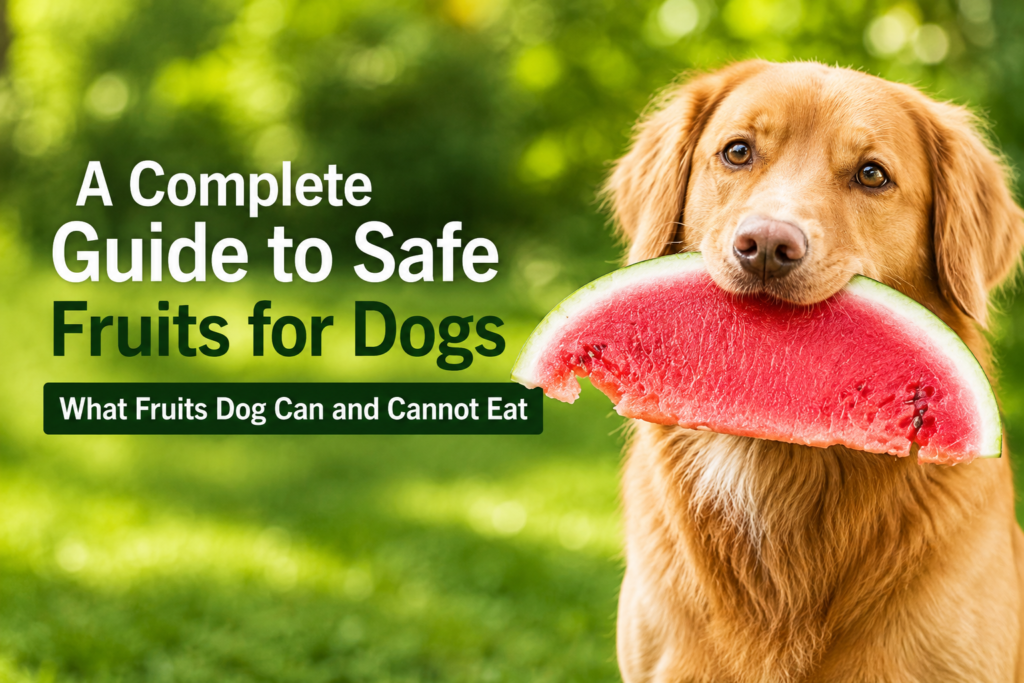
If you love sharing healthy snacks with your dog, you may wonder, what fruit can dogs not eat? While many fruits are safe for dogs in small amounts, some fruits can be dangerous, toxic, or difficult for dogs to digest. Knowing what fruit can dogs not eat is important because certain fruits contain toxic compounds, harmful seeds, pits, stems, or excessive amounts of sugar.
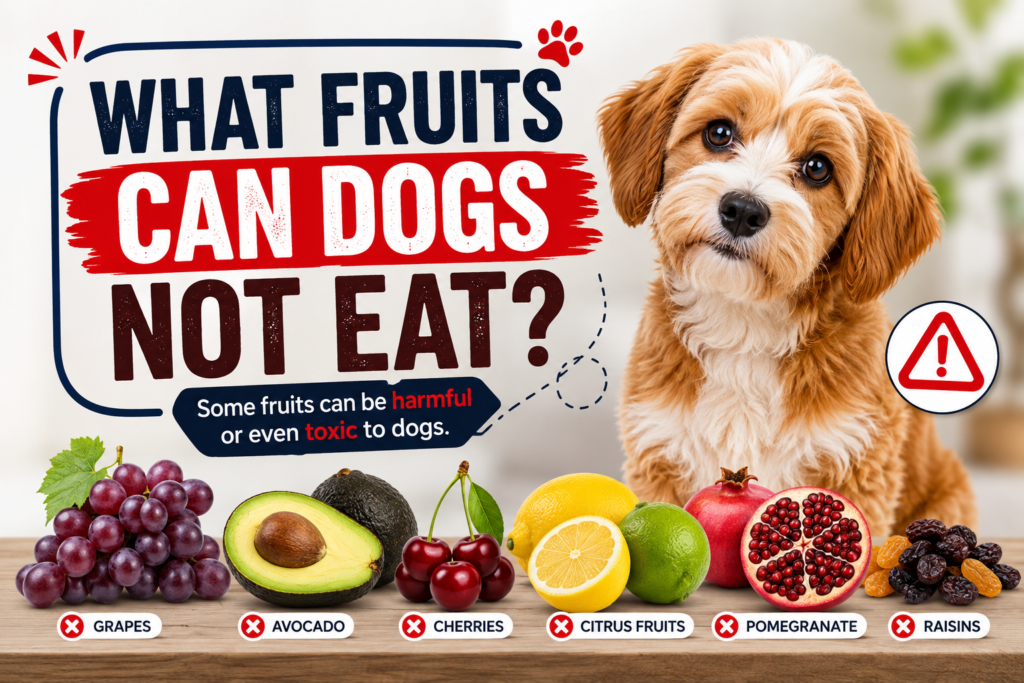
Dogs have different digestive systems from humans, so a fruit that is perfectly safe for people is not automatically safe for dogs. Some fruits may cause mild stomach upset, while others can potentially cause serious health problems. This guide explains what fruit can dogs not eat, which fruits should be avoided completely, which fruits require extra preparation, and what to do if your dog eats a potentially dangerous fruit.
What Fruit Can Dogs Not Eat?
When asking what fruit can dogs not eat, the most important fruits to remember include grapes, raisins, and certain fruits or fruit parts containing dangerous pits and seeds.
Here are some fruits that dog owners should be especially careful about:
- Grapes
- Raisins
- Currants
- Cherries, especially the pits
- Peaches with pits
- Plums with pits
- Apricots with pits
- Apple seeds and cores
- Certain wild or unknown berries
- Large amounts of citrus fruit
- Fruit products containing artificial sweeteners or other unsafe ingredients
The answer to what fruit can dogs not eat is not always as simple as saying an entire fruit is poisonous. Sometimes the fruit flesh may be relatively safe while the seeds, pits, stems, or leaves can create serious problems.
Can Dogs Eat Grapes?
If you are researching what fruit can dogs not eat, grapes should be near the top of the list.
Dogs should not be intentionally fed grapes. Grapes and grape products can cause serious illness in dogs, and the exact amount that may cause a problem can vary between individual dogs.
One important concern is that some dogs can become seriously ill after eating grapes, while others may appear normal initially. Because it is difficult to predict which dog will develop complications, grapes should be treated as a fruit to avoid.
If your dog has eaten grapes, do not wait for symptoms before seeking veterinary advice.
Signs of a possible grape-related problem can include:
- Vomiting
- Loss of appetite
- Lethargy
- Weakness
- Abdominal discomfort
- Increased or decreased urination
- Changes in thirst
- Signs of kidney problems
This is one of the biggest reasons the question what fruit can dogs not eat is so important for new dog owners.
Can Dogs Eat Raisins?
Raisins are another major answer to what fruit can dogs not eat.
Because raisins are dried grapes, they should also be kept away from dogs. Raisins can be particularly concerning because they are concentrated compared with fresh grapes.
Do not give your dog raisins as treats or mix them into homemade dog food.
You should also check foods such as:
- Trail mix
- Breakfast cereals
- Baked goods
- Cookies
- Bread
- Granola
- Fruit cakes
Some of these products may contain raisins without being obviously labeled as raisin snacks.
If your dog accidentally eats raisins, contact a veterinarian promptly rather than waiting for symptoms.
Can Dogs Eat Cherries?
Cherries are another fruit that requires caution when considering what fruit can dogs not eat.
The flesh of a ripe cherry is not generally considered the main concern. The bigger problems are the pit, stem, and leaves.
Cherry pits can create a choking or intestinal blockage risk. Cherry pits and other plant parts also contain compounds that can be harmful if consumed in sufficient quantities.
For these reasons, it is generally easier and safer to choose another dog-friendly fruit rather than giving your dog whole cherries.
If you do give cherry flesh, the pit, stem, and leaves must be completely removed. However, because accidental ingestion is possible, many dog owners choose safer fruits instead.
Can Dogs Eat Peaches?
Peaches are an example of a fruit where preparation matters.
The peach flesh can be given to many dogs in small amounts when prepared properly. However, the peach pit should never be treated as a dog treat.
The pit can cause:
- Choking
- Intestinal blockage
- Digestive problems
- Potential toxicity concerns if the pit is chewed or broken
So when asking what fruit can dogs not eat, peaches are better described as a fruit that requires careful preparation rather than a fruit whose flesh is automatically toxic.
Never allow your dog to chew on a peach pit.
Can Dogs Eat Plums?
Plums are similar to peaches.
The ripe flesh can be offered in a small amount after the pit has been completely removed. However, plum pits can present serious risks.
A dog that swallows a pit may develop a gastrointestinal obstruction. A dog that chews certain pits may also be exposed to harmful compounds.
Therefore, if you are making a list of what fruit can dogs not eat, whole plums with pits should definitely be included on the caution list.
Can Dogs Eat Apricots?
Apricots can also be confusing for dog owners.
The flesh of an apricot may be suitable for some dogs when offered in a small amount, but the pit, stem, and leaves should be avoided.
The pit can be dangerous because it may cause choking or obstruction. Certain parts of stone fruits also contain compounds that can become harmful when damaged or consumed.
If you give your dog a small piece of apricot, remove the pit completely and only offer the fruit flesh.
Can Dogs Eat Apple Seeds?
Apples are generally considered one of the more dog-friendly fruits, but the seeds and core should not be given to dogs intentionally.
This is an important distinction when discussing what fruit can dogs not eat.
Apple flesh can be a tasty occasional treat, but apple seeds contain compounds that can release cyanide when sufficiently broken down. A few accidentally swallowed seeds are unlikely to cause poisoning in most dogs, but that does not mean they should be deliberately fed.
Before giving your dog apple:
- Wash the apple.
- Remove the stem.
- Remove the core.
- Remove the seeds.
- Cut the apple into small pieces.
- Give only a moderate portion.
What Fruit Can Dogs Not Eat Because of Seeds and Pits?
Sometimes the biggest danger is not the fruit itself but the part of the fruit your dog eats.
This is why understanding what fruit can dogs not eat should also include learning about fruit pits and seeds.
Potentially problematic fruit parts include:
- Apple seeds
- Cherry pits
- Peach pits
- Plum pits
- Apricot pits
- Stems
- Leaves
- Large or hard seeds
Fruit pits can be dangerous because they may become lodged in the digestive tract. Large pits can also be choking hazards.
For smaller dogs, the risk of obstruction may be even more concerning because their digestive tracts are smaller.
Can Dogs Eat Citrus Fruits?
Citrus fruits such as oranges, lemons, limes, and grapefruit are another area where portion size matters.
Small amounts of orange flesh may be tolerated by many dogs, but large amounts of citrus can cause digestive upset because of their acidity and sugar content.
The peel and seeds are also not ideal for dogs.
Lemon and lime are generally not good choices as dog treats because of their strong acidity and bitter taste.
So when considering what fruit can dogs not eat, citrus fruits are usually better placed in the “use caution” category rather than treating every citrus fruit as completely poisonous.
Can Dogs Eat Lemon?
Lemon is not a good fruit to offer as a regular dog treat.
The acidic taste can irritate the stomach, and the peel and other parts are not appropriate for dogs to consume.
If your dog accidentally licks a small amount of lemon, it may simply develop temporary stomach upset. However, you should not intentionally feed lemon to your dog.
Can Dogs Eat Lime?
Like lemon, lime is acidic and can cause digestive irritation.
Dogs generally do not need lime as part of their diet. There are plenty of safer fruits that can be used as occasional treats.
If you are searching what fruit can dogs not eat, you should remember that not every unsafe choice is necessarily poisonous. Some fruits are simply poor choices because they can cause digestive problems.
Can Dogs Eat Grapefruit?
Grapefruit is another citrus fruit that should not be a regular treat for dogs.
Its acidity can cause stomach upset, and the peel and seeds are not appropriate for dogs.
Because dogs have no nutritional requirement for grapefruit, there is little reason to offer it when safer fruit choices are available.
Are Fruit Pits Dangerous for Dogs?
Yes, fruit pits can be dangerous.
This is an important part of understanding what fruit can dogs not eat.
Fruit pits may cause physical problems such as choking or intestinal obstruction. Some pits and other plant parts also contain compounds that can become harmful when chewed or digested.
Never allow your dog to play with fruit pits.
Even if your dog has eaten fruit before without problems, that does not mean chewing a large pit is safe.
What Fruit Can Dogs Not Eat If It Is Moldy?
Moldy fruit should never be given to dogs.
Mold can produce toxins that may cause serious illness. Dogs that eat spoiled or moldy food can develop symptoms such as:
- Vomiting
- Diarrhea
- Tremors
- Agitation
- Weakness
- Seizures
- Abnormal behavior
Therefore, what fruit can dogs not eat also includes fruit that is spoiled, fermented, or visibly moldy.
Do not assume that removing the visible mold makes the remaining fruit safe.
Can Dogs Eat Wild Berries?
Unknown wild berries should not be given to dogs.
There are many different types of berries, and some can be toxic. If you cannot confidently identify a berry as safe for dogs, it is better to keep your dog away from it.
This is especially important during walks, hikes, and outdoor activities.
A dog may naturally investigate unfamiliar plants and berries, so supervision can help prevent accidental ingestion.
What Fruit Can Dogs Not Eat in Large Amounts?
Even fruits that are considered safe can cause problems when dogs eat too much.
Large quantities of fruit may provide excessive:
- Sugar
- Calories
- Fiber
- Acidity
Too much fruit can cause diarrhea, gas, vomiting, or stomach discomfort.
Therefore, the question what fruit can dogs not eat should also be expanded to include the question of how much fruit a dog should eat.
Fruit should generally be an occasional treat rather than replacing a complete and balanced dog food.
Why Should Dogs Avoid Grapes and Raisins?
Grapes and raisins deserve special attention because their effects can be unpredictable.
Researchers have identified tartaric acid as a likely toxic component associated with grape and raisin poisoning in dogs, although individual sensitivity can vary.
The main concern is acute kidney injury.
A dog may initially appear fine after eating grapes or raisins, but symptoms can develop later. That is why waiting to see whether your dog becomes sick is not a good approach.
If your dog eats grapes or raisins, contact a veterinarian or emergency veterinary service as soon as possible.
What Fruit Can Dogs Not Eat Because It Can Cause Choking?
Large, hard fruit pieces can become choking hazards even when the fruit itself is safe.
Dogs may swallow food quickly, particularly when they are excited about treats.
For safer feeding:
- Cut fruit into small pieces.
- Remove pits.
- Remove seeds when appropriate.
- Remove tough stems.
- Supervise your dog while eating.
- Consider your dog’s size when preparing treats.
A large piece of fruit that is safe for a large dog may be inappropriate for a small dog.
What Fruit Can Dogs Not Eat With Added Ingredients?
Sometimes the fruit itself is not the problem.
Fruit-based foods may contain ingredients that are dangerous for dogs.
Avoid giving dogs fruit products containing:
- Xylitol
- Chocolate
- Raisins
- Grapes
- Excessive sugar
- Artificial sweeteners
- Alcohol
- High amounts of salt
For example, plain apple may be suitable for many dogs, but an apple dessert containing xylitol or chocolate can be dangerous.
Always check the ingredient list before sharing human food with your dog.
What Should You Do If Your Dog Eats Unsafe Fruit?
If your dog eats something you believe may be dangerous, stay calm but take the situation seriously.
First, determine what your dog ate.
Try to identify:
- The type of fruit
- How much was eaten
- Whether seeds or pits were swallowed
- Whether the fruit was fresh, dried, or cooked
- When your dog ate it
- Your dog’s approximate size
If the fruit is known to be potentially toxic, such as grapes or raisins, contact a veterinarian promptly.
Do not induce vomiting unless a veterinary professional specifically tells you to do so.
Signs Your Dog May Have Eaten a Problematic Fruit
After eating an unsafe fruit, a dog may develop different symptoms depending on what was consumed.
Possible signs include:
- Vomiting
- Diarrhea
- Drooling
- Loss of appetite
- Lethargy
- Weakness
- Abdominal pain
- Difficulty breathing
- Tremors
- Changes in urination
- Excessive thirst
- Collapse
- Seizures
Some dangerous substances may cause delayed symptoms, so the absence of symptoms does not always mean everything is fine.
What Fruit Can Dogs Eat Instead?
After learning what fruit can dogs not eat, many dog owners naturally want to know which fruits are safer alternatives.
Some fruits that can be appropriate for many dogs when prepared correctly and served in moderation include:
- Apples without seeds and core
- Bananas
- Blueberries
- Strawberries
- Watermelon without seeds and rind
- Cantaloupe
- Mango without the pit
- Pineapple in small amounts
- Pear without seeds and core
Even safe fruits should be introduced gradually.
Every dog is different, and some dogs may experience digestive upset after eating foods that other dogs tolerate well.
Can Dogs Eat Bananas?
Bananas can be an occasional treat for many dogs.
They provide carbohydrates, fiber, and nutrients such as potassium. However, bananas also contain natural sugar, so large portions are not ideal.
Cut a banana into small pieces and give it as an occasional snack.
If your dog has never eaten banana before, start with a small amount and monitor for digestive problems.
Can Dogs Eat Blueberries?
Blueberries are a convenient small fruit that many dogs can enjoy.
They can be offered fresh and washed, preferably in small portions.
Because blueberries are small, they may work well as training treats for some dogs. However, treats of any kind should remain a relatively small part of the overall diet.
Can Dogs Eat Strawberries?
Strawberries can also be given to many dogs in moderation.
Wash them thoroughly, remove the green top, and cut large strawberries into smaller pieces.
Like other fruits, strawberries contain natural sugar, so they should not replace a balanced dog food.
Can Dogs Eat Watermelon?
Watermelon can be a refreshing occasional treat.
However, the seeds and rind should be removed. The rind can be difficult to digest, while seeds can create unnecessary concerns.
Serve only the flesh and cut it into appropriately sized pieces.
How Much Fruit Can a Dog Eat?
The appropriate amount depends on the dog’s size, diet, age, activity level, and individual health needs.
Fruit should generally be treated as an occasional snack rather than a major source of calories.
Too many treats can contribute to excessive calorie intake and weight gain.
If your dog has diabetes, obesity, digestive problems, food allergies, or another health condition, ask your veterinarian before adding fruit regularly.
What Fruit Can Dogs Not Eat: Quick Safety Guide
When remembering what fruit can dogs not eat, focus on the following rules:
Avoid grapes and raisins.
These are among the most important fruits to keep away from dogs because they can cause serious illness.
Avoid fruit pits.
Cherry, peach, plum, and apricot pits can cause choking or intestinal obstruction and may contain harmful compounds.
Remove apple seeds and cores.
The apple flesh can be a suitable occasional treat, but seeds and cores should be removed.
Avoid unknown wild berries.
Never allow your dog to eat unidentified berries.
Avoid moldy or spoiled fruit.
Mold can produce dangerous toxins.
Avoid fruit products with unsafe ingredients.
Check for xylitol, chocolate, raisins, grapes, and other harmful ingredients.
Keep portions small.
Even safe fruits can cause digestive upset when eaten in excessive quantities.
Frequently Asked Questions
What fruit can dogs not eat at all?
Grapes and raisins are among the most important fruits that dogs should not eat. Dogs should also avoid fruit pits, unknown wild berries, and moldy or spoiled fruit.
What fruit is poisonous to dogs?
Grapes and raisins are well-known examples of fruits that can cause serious poisoning in dogs. Certain wild or unidentified berries may also be toxic.
Can one grape hurt a dog?
A dog can potentially become seriously ill after eating grapes, and individual sensitivity varies. Because there is no reliable way to predict which dogs will develop problems, any grape ingestion should be taken seriously.
What fruit can dogs not eat with seeds?
Dogs should not intentionally eat fruit seeds such as apple seeds. Fruit pits from cherries, peaches, plums, and apricots are particularly concerning because they can cause choking or obstruction.
Can dogs eat fruit every day?
Some dogs can have small amounts of appropriate fruit regularly, but fruit should generally remain an occasional treat and should not replace a complete and balanced diet.
Can dogs eat dried fruit?
Dried fruit requires extra caution. Raisins should never be given to dogs. Other dried fruits may contain concentrated sugar or added ingredients, so fresh, properly prepared fruit is generally a simpler choice.
What fruit can dogs not eat when pregnant?
Pregnant dogs should still avoid known dangerous foods such as grapes and raisins. Because nutritional requirements can change during pregnancy, it is best to discuss treats and diet changes with a veterinarian.
Can puppies eat fruit?
Some puppies can eat small portions of suitable fruits, but puppies have specific nutritional requirements. Treats should not interfere with their complete puppy diet.
Final Thoughts
Understanding what fruit can dogs not eat can help protect your dog from accidental poisoning, choking, digestive problems, and intestinal blockages. The most important fruits to avoid include grapes and raisins, while fruit pits, seeds, stems, leaves, unknown berries, and moldy fruit also require serious caution.
Remember that not every fruit is dangerous in its entirety. In many cases, the flesh may be suitable while the pit, seeds, stem, rind, or leaves should be removed.
When introducing fruit, choose a dog-friendly option, wash it properly, remove unsafe parts, cut it into small pieces, and offer only a moderate amount.
If your dog eats grapes, raisins, an unknown berry, a fruit pit, or another potentially dangerous substance, contact your veterinarian promptly. Knowing what fruit can dogs not eat before an accident happens is one of the simplest ways to make treat time safer for your canine companion.